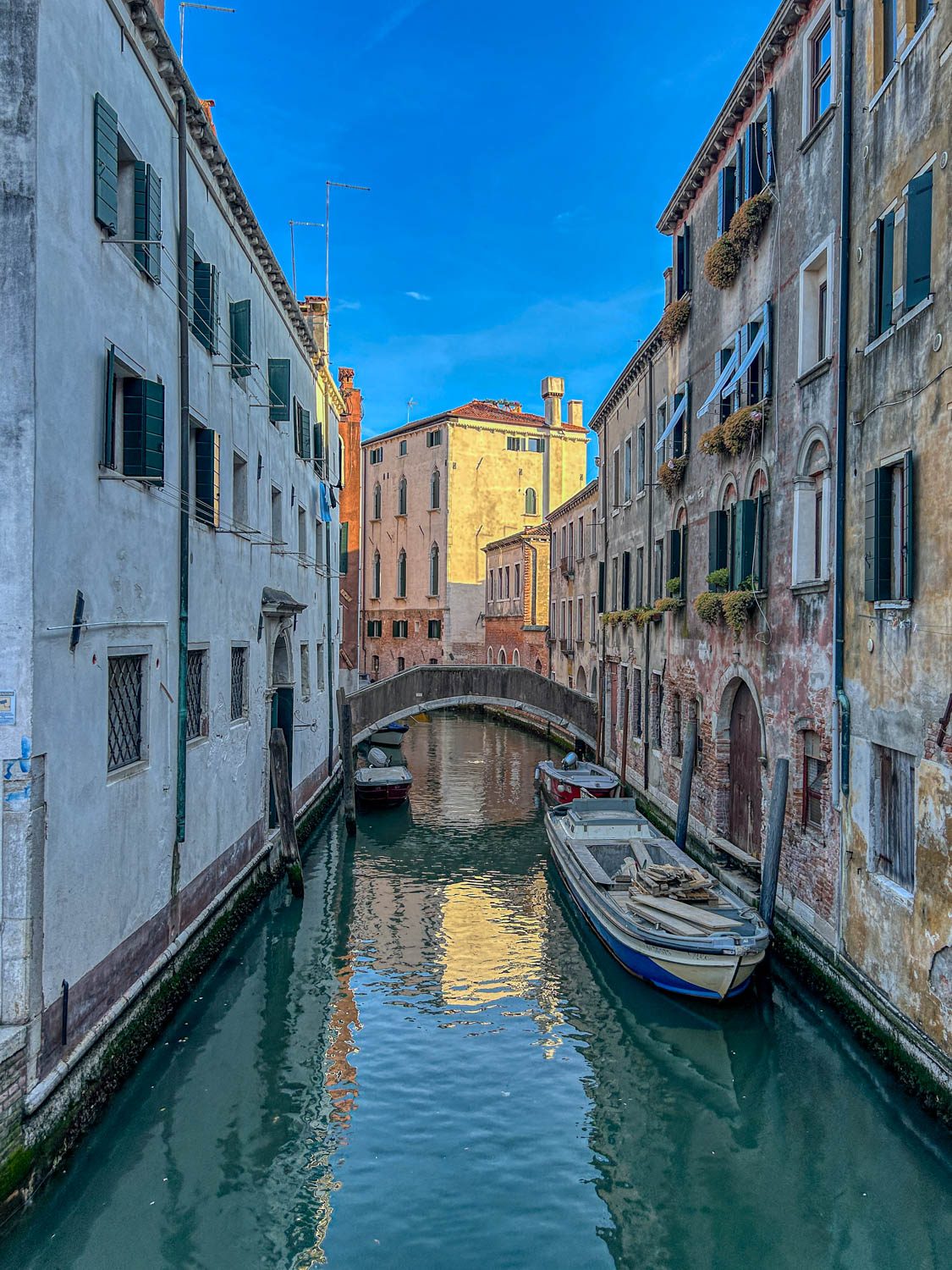
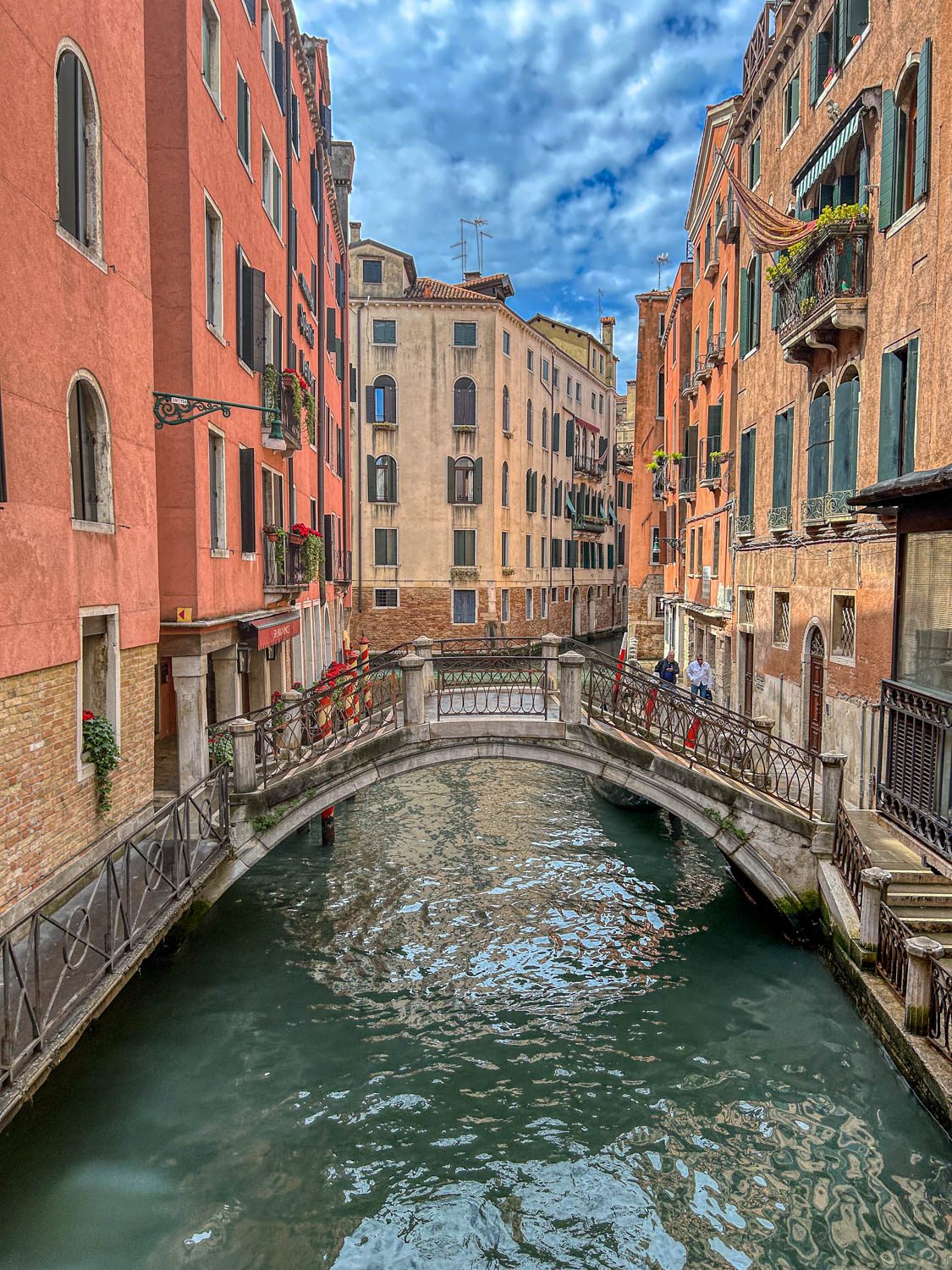
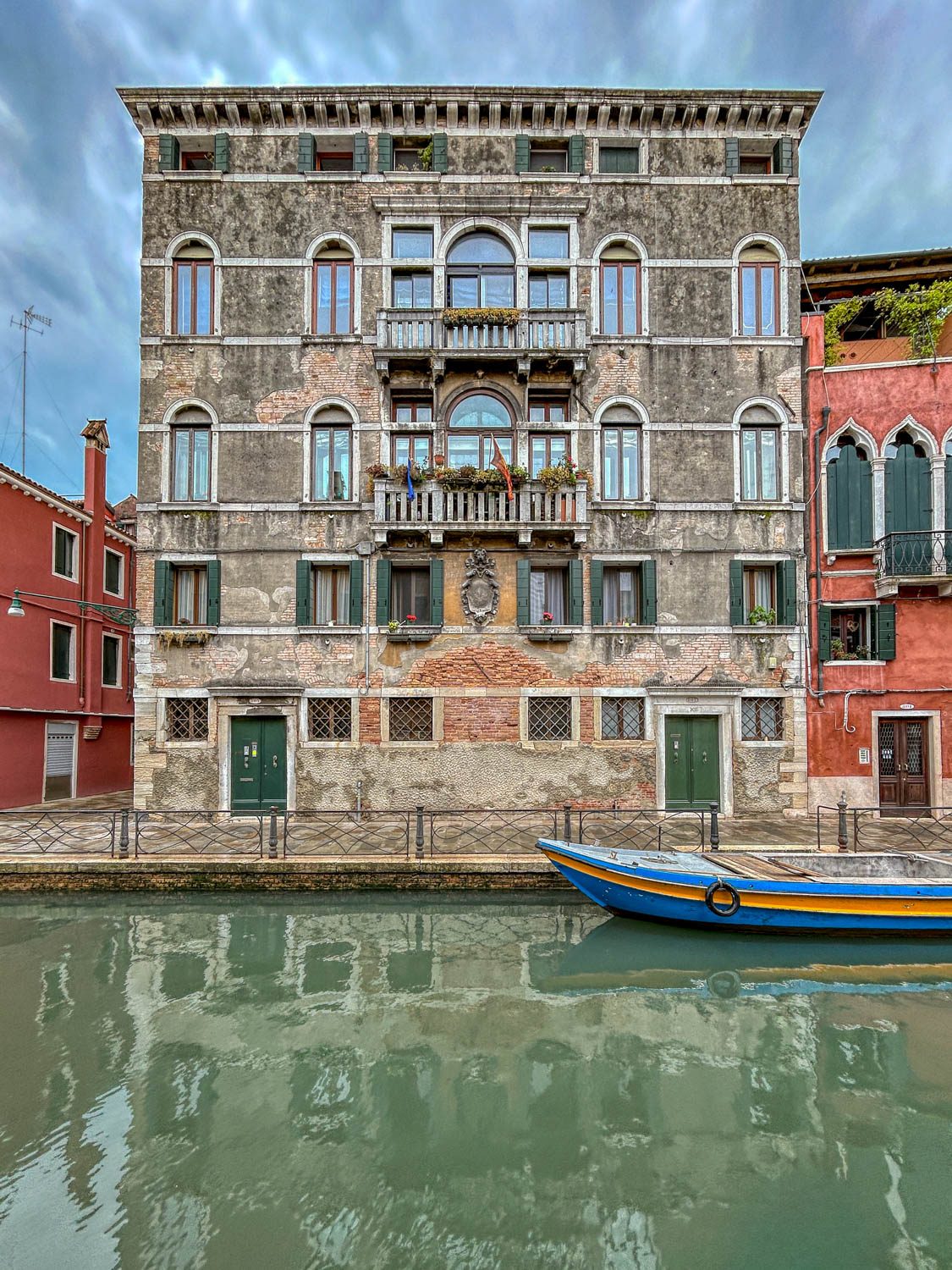
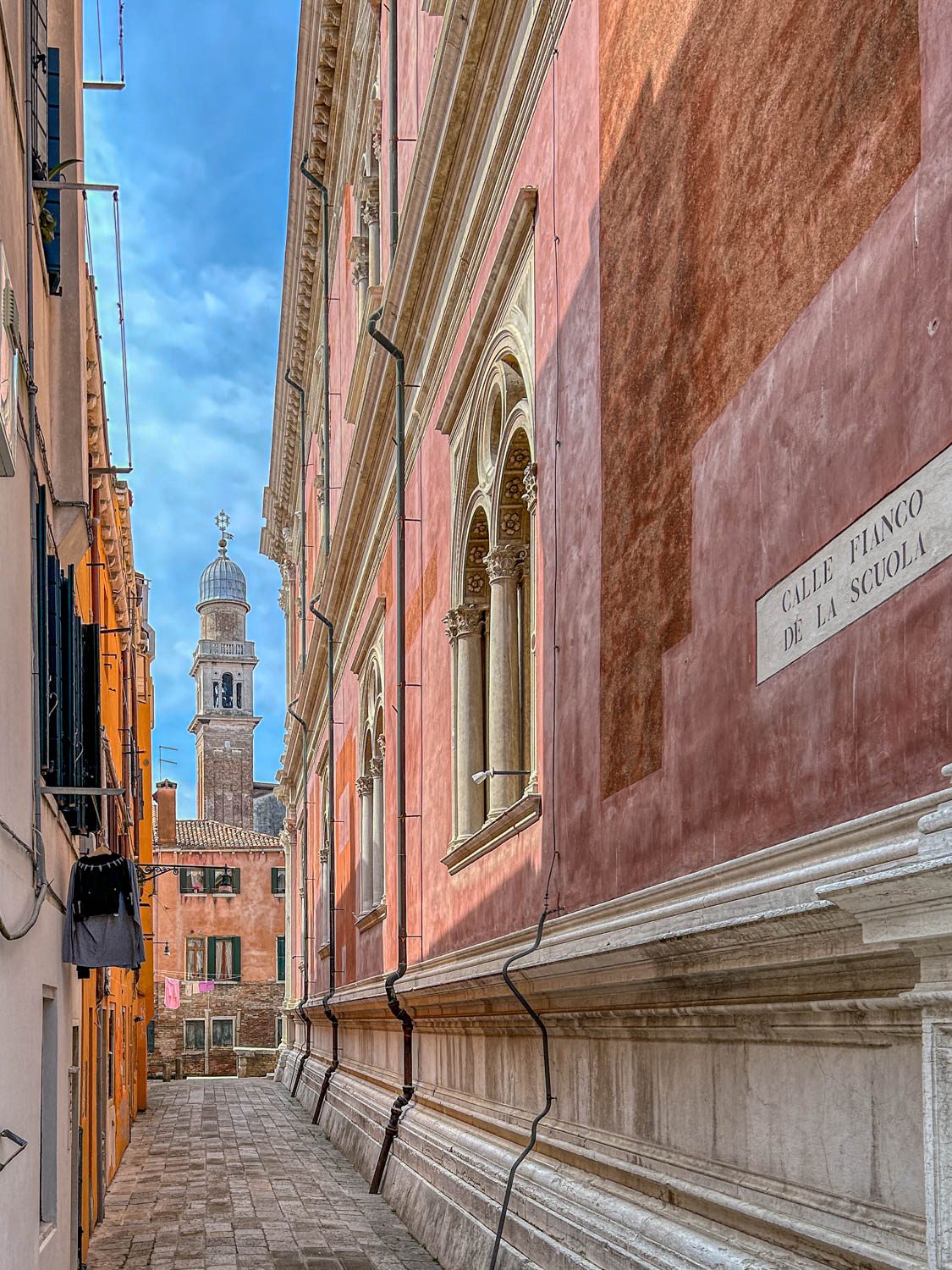
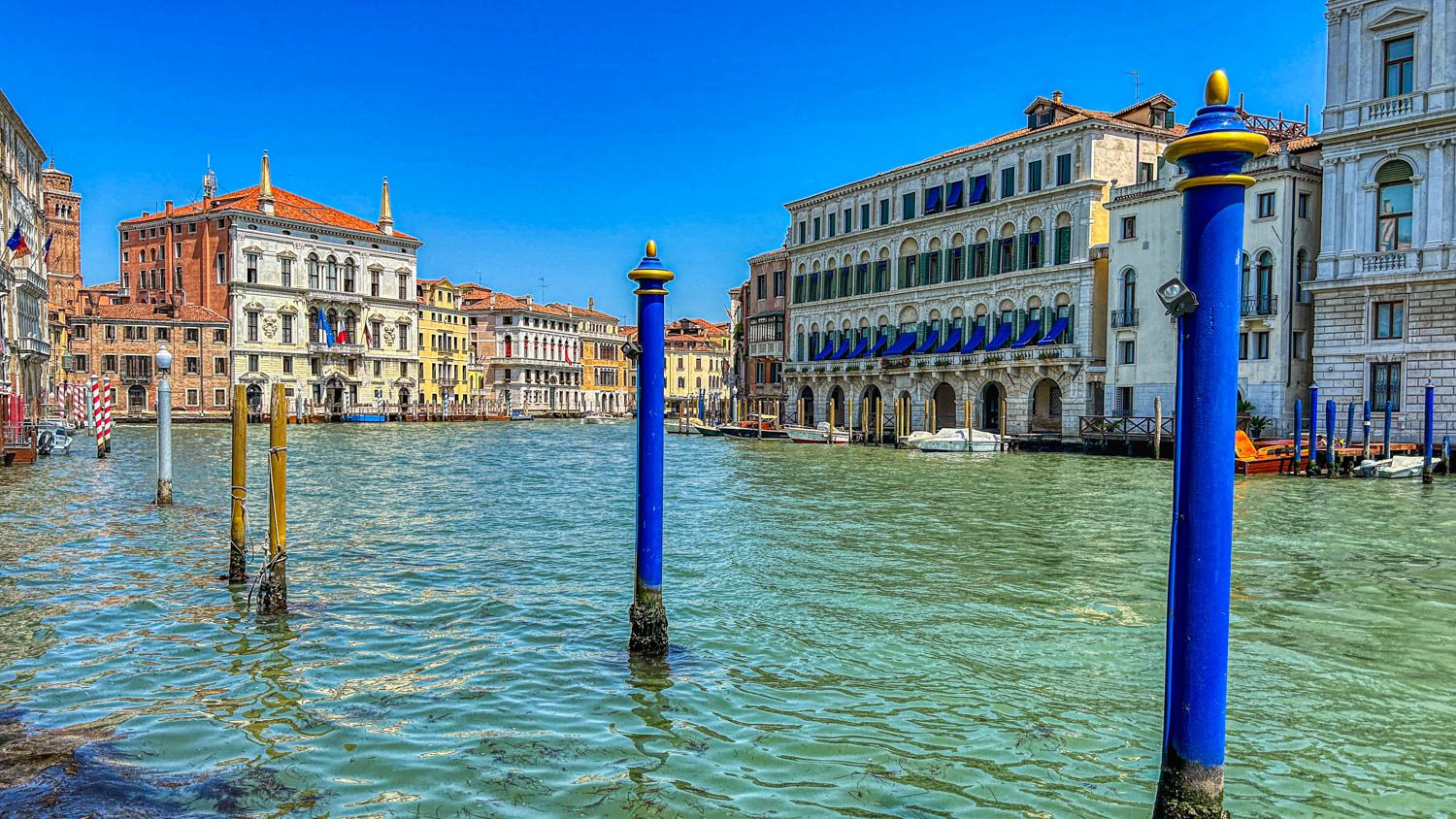
I love walking around Venezia with no set destination, just exploring the quaint alleys, bridges and canals. Even taking the garbage out early in the morning can offer picturesque views.
And the food?
Restaurants in Venezia are good but pretty expensive. I tried to balance my budget by making my own meals at home often. Fortunately, there are some appetizing ingredients in Italy. Even a simple sandwich made with focaccia (a flat, oven-baked bread flavored with olive oil and herbs), mascarpone (a thick dairy cream), and prosciutto (uncooked, unsmoked, dry-cured ham) is a tasty treat.
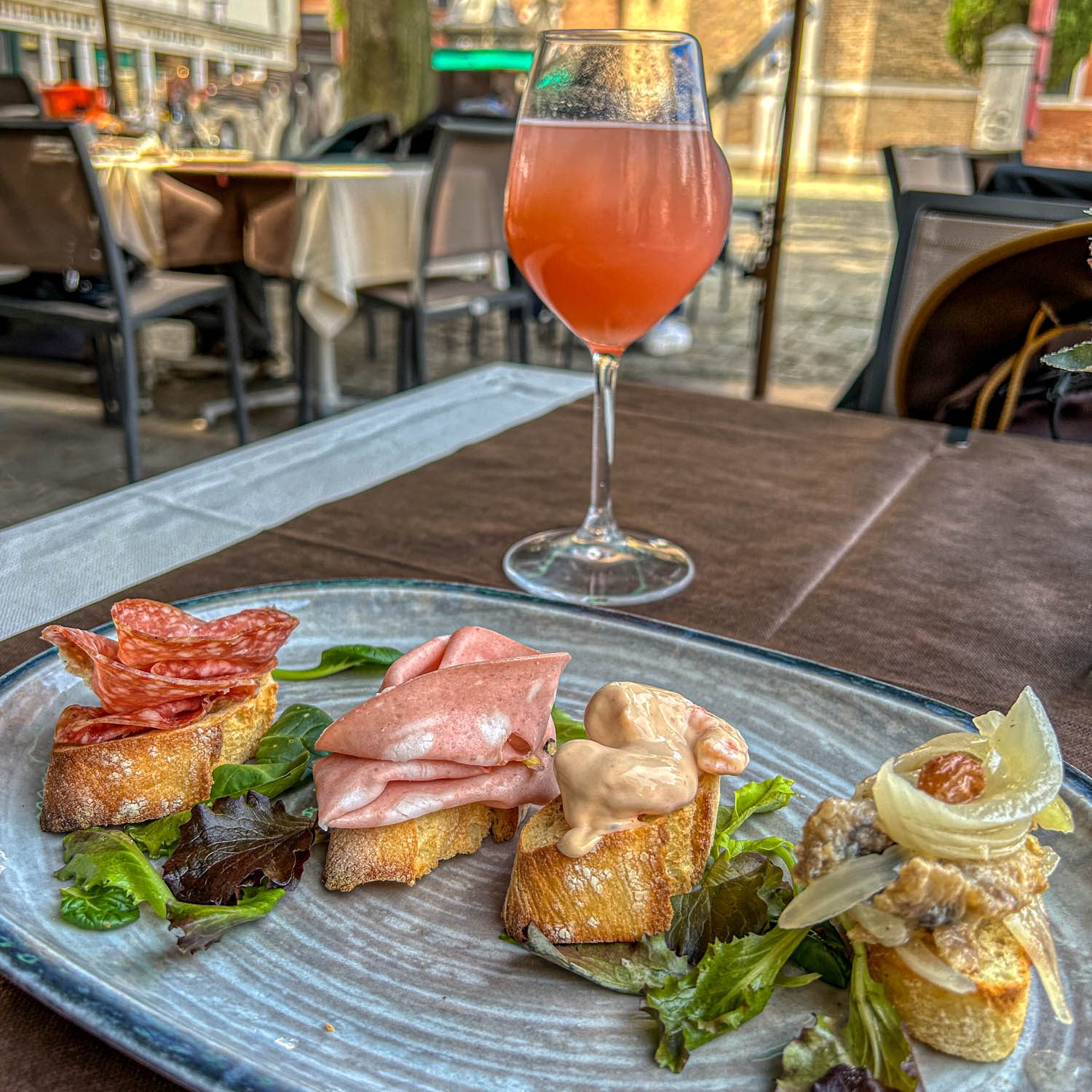
What the Venetians seem to eat the most are the cicchetti (pronounced chi-keh-tee), small appetizers served on bread. It can be ham, shrimp, bell peppers, anything really. A very popular one, considered quintessentially Venetian, is the baccalà mantecato (cod poached in milk, garlic, olive oil, salt, and pepper). Not bad with a prosecco, another specialty from the Veneto region. If you don't know, it's a sparkling white wine made with the prosecco grape. In my humble opinion, it's better than champagne.
Cicchetti and a bellini
Another Italian drink I kept at home for night libations was the delicious limoncello, a liqueur made from the zest of lemons. The one I got was the Limoncello Artigianale Villa Santa Maria, from Abruzzo.
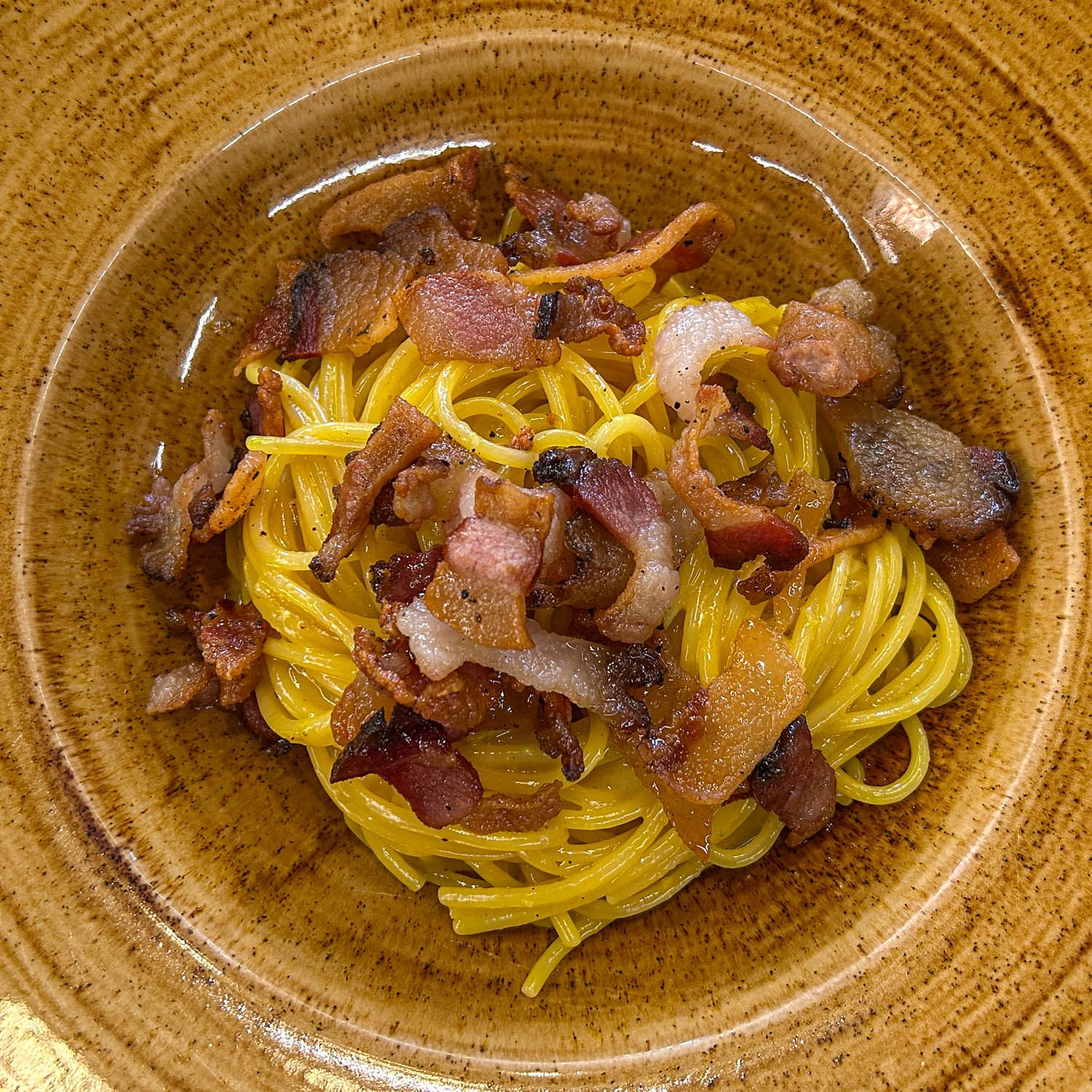
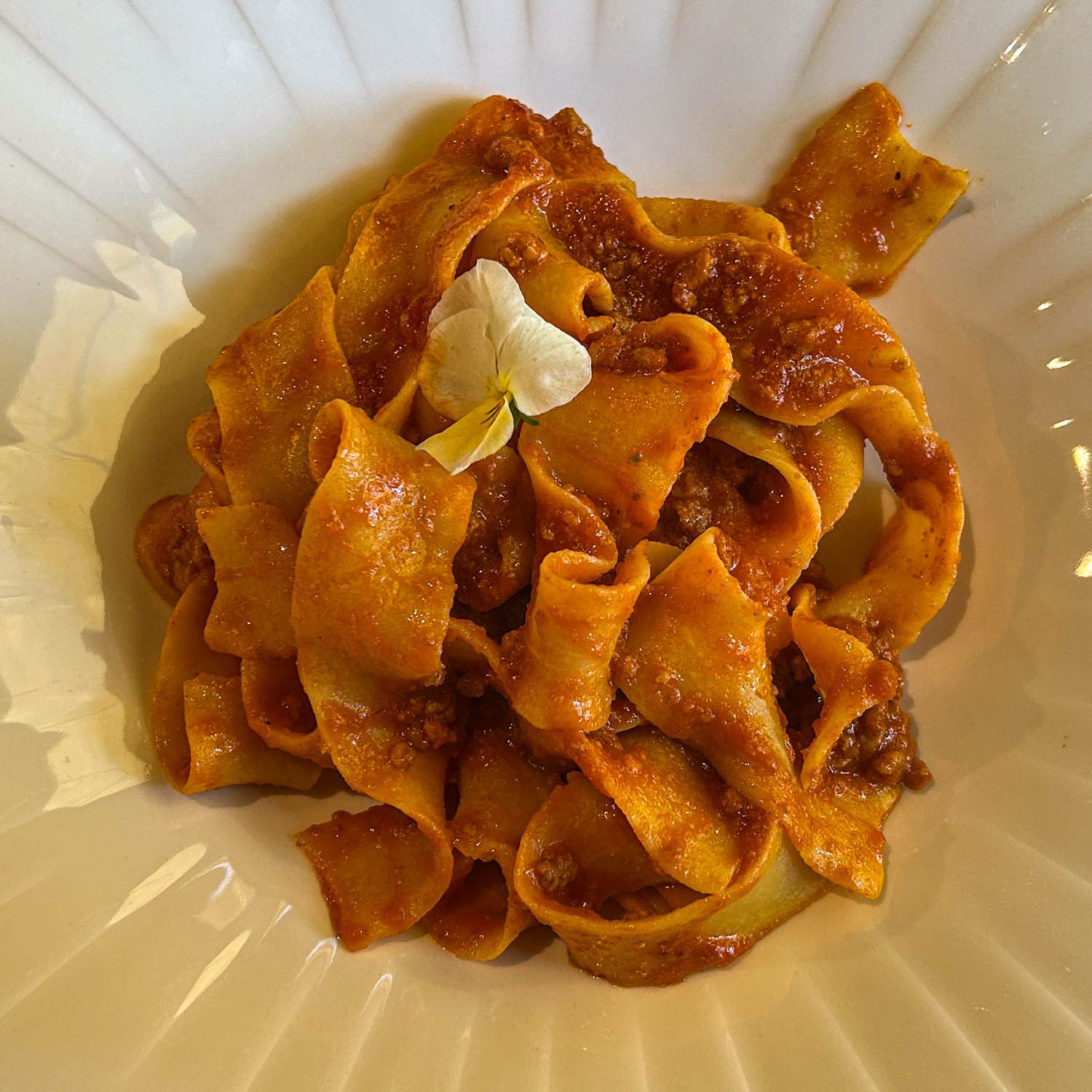
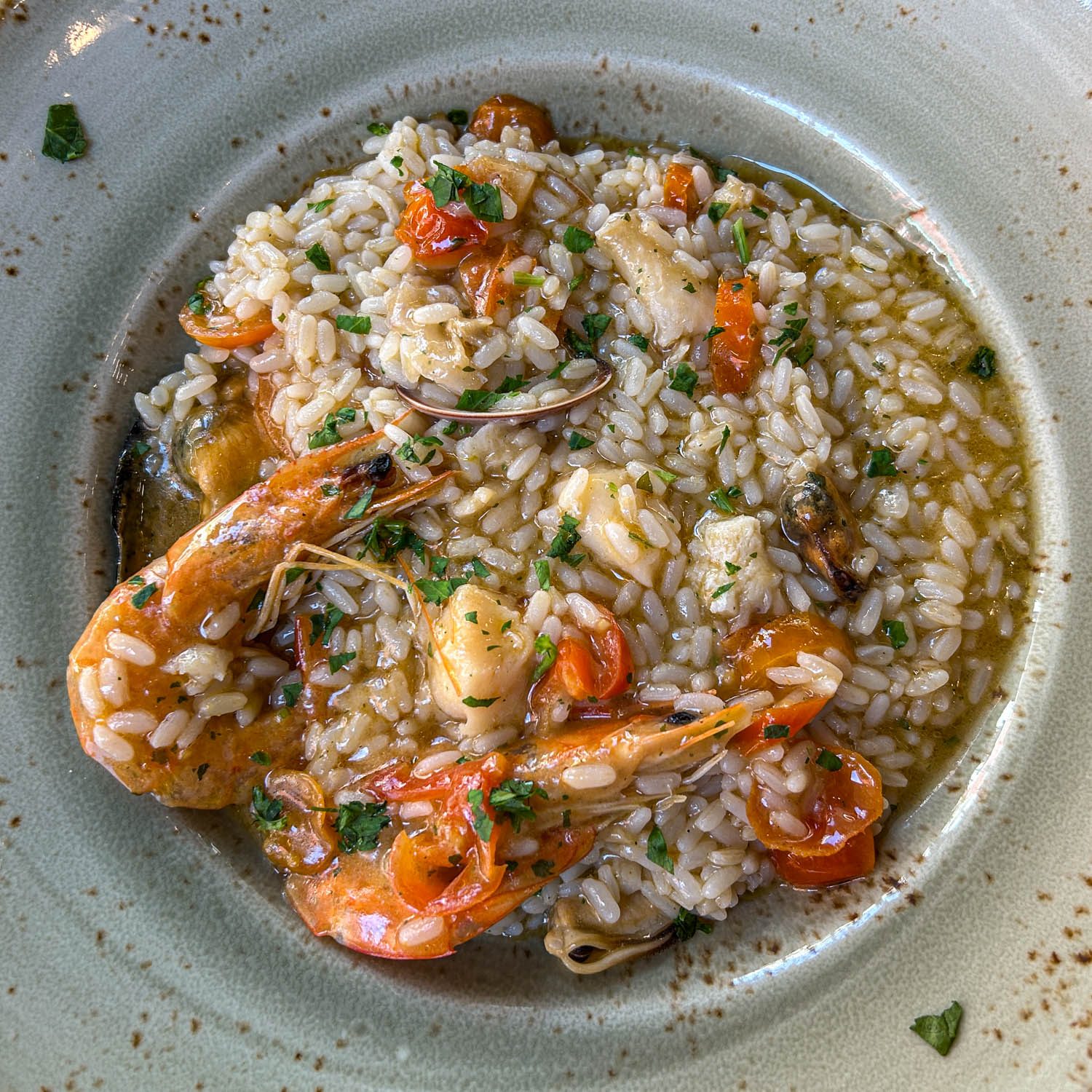
I had some of the traditional Italian dishes, of course, including gnocchi quattro formaggi, lasagna bolognese, spaghetti carbonara, pappardelle al ragù di filetto e pomodorini, cannelloni con ricotta e spinaci, and so on. Maybe the most popular in Venezia is the risotto alla pescatora, which is a seafood risotto, with prawns, squid, mussels, clams, and cod. I had one, accompanied by a glass of Valpolicella Classico Superiore, that was very good.
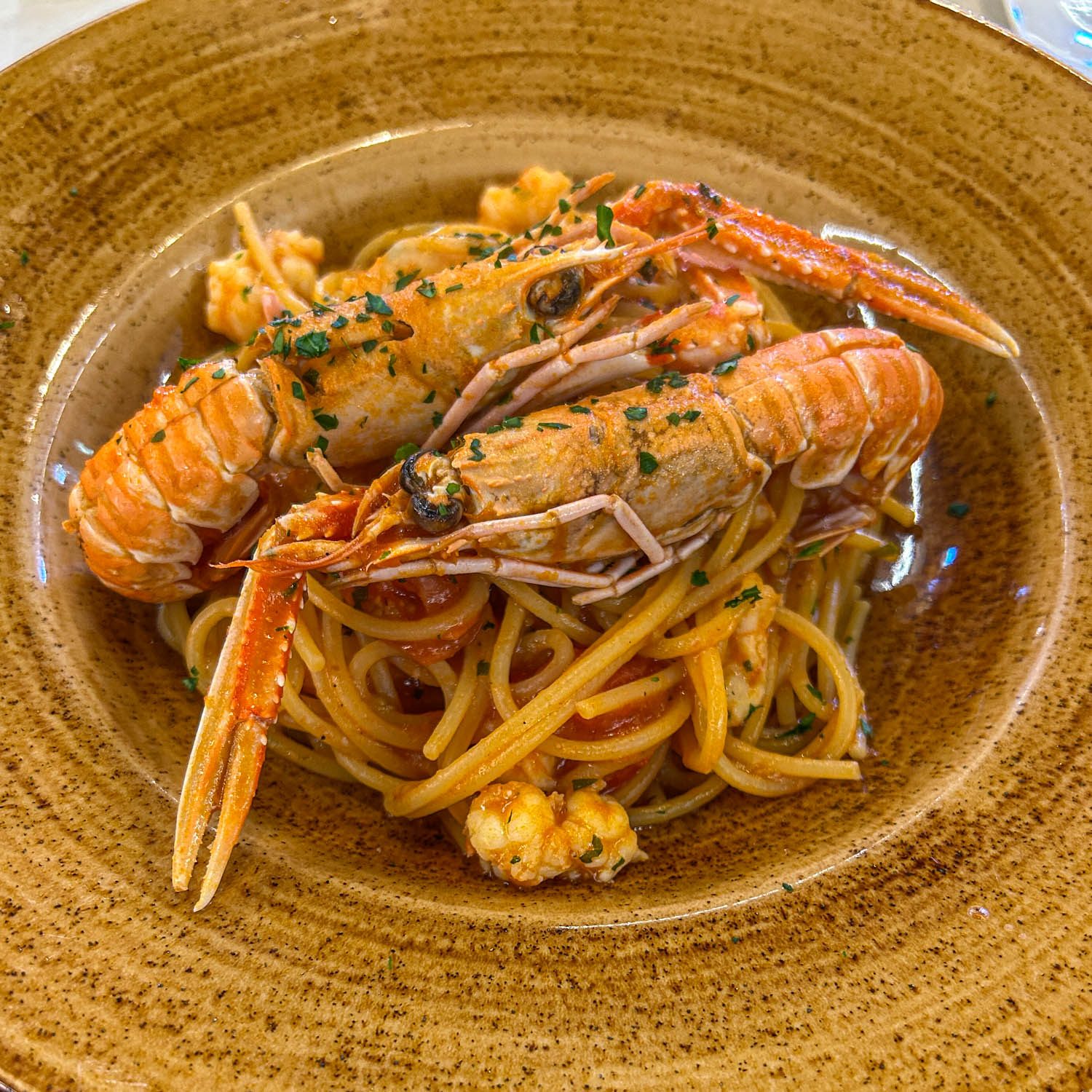
When I was in Budva (Montenegro) two years ago, I ate škampi na buzara (buzara is a sauce made with garlic, tomatoes, bell peppers, onions, and wine), which they told me was a local dish. Now that I'm in Venezia, I ate spaghetti alla buzara, which they also told me was a local dish. Apparently, when Venezia ruled large parts of the eastern Adriatic (including Montenegro), they absorbed the dish into Venetian cuisine, adding the pasta. The one I had in Budva was made with pink shrimp from the Adriatic. The Venetian one was made with Adriatic scampi (langoustine). Both delicious.
I went, once more, to Harry's Bar. The last time had been more than three decades ago, but everything still looks the same. If you don't know, that's the bar frequented by Ernst Hemingway, and also by Colonel Richard Cantwell, the protagonist of his book Across the River and into the Trees. The bar has been in that corner since 1931 (if you don't know it's there, you may miss it), and its original owner, Giuseppe Cipriani, was the proud inventor of the bellini (a cocktail made with prosecco and peach purée) and the carpaccio (thinly sliced beef, served raw). That duo was exactly what I had for lunch, while I wondered which frequent customer had once sat at the same table where I was: Arturo Toscanini, Alfred Hitchcock, Orson Welles, Woody Allen, perhaps Hemingway himself?
"The Contessa is not at home, my Colonel," he said. "They believe you might find her at Harry's."
"You find everything on earth at Harry's."
"Yes, my Colonel. Except, possibly, happiness."
"I'll damn well find happiness, too," the Colonel assured him. "Happiness, as you know, is a movable feast."
Any side trips?
Padova
One day, I went to Padova, twenty-five minutes by train west of Venezia. It's not a small place (about 200,000 people), but it feels like a nice little town.
First, let me say what I didn't see there. I didn't see Donatello's horse, the famous Equestrian Statue of Gattamelata, from 1453. It was removed from its pedestal last year to be restored, and hasn't been returned yet. I also didn't see Giotto's frescoes, from 1305. They are inside a small chapel, the Cappella degli Scrovegni, and you need to reserve your tickets well in advance. But I did see many other things.
Giardini dell'Arena
As you walk around downtown Padova, the first thing you notice are the arches. Many streets are lined with porticoes of different ages and styles, providing shaded and arched pedestrian walkways.
Via Galileo Galilei
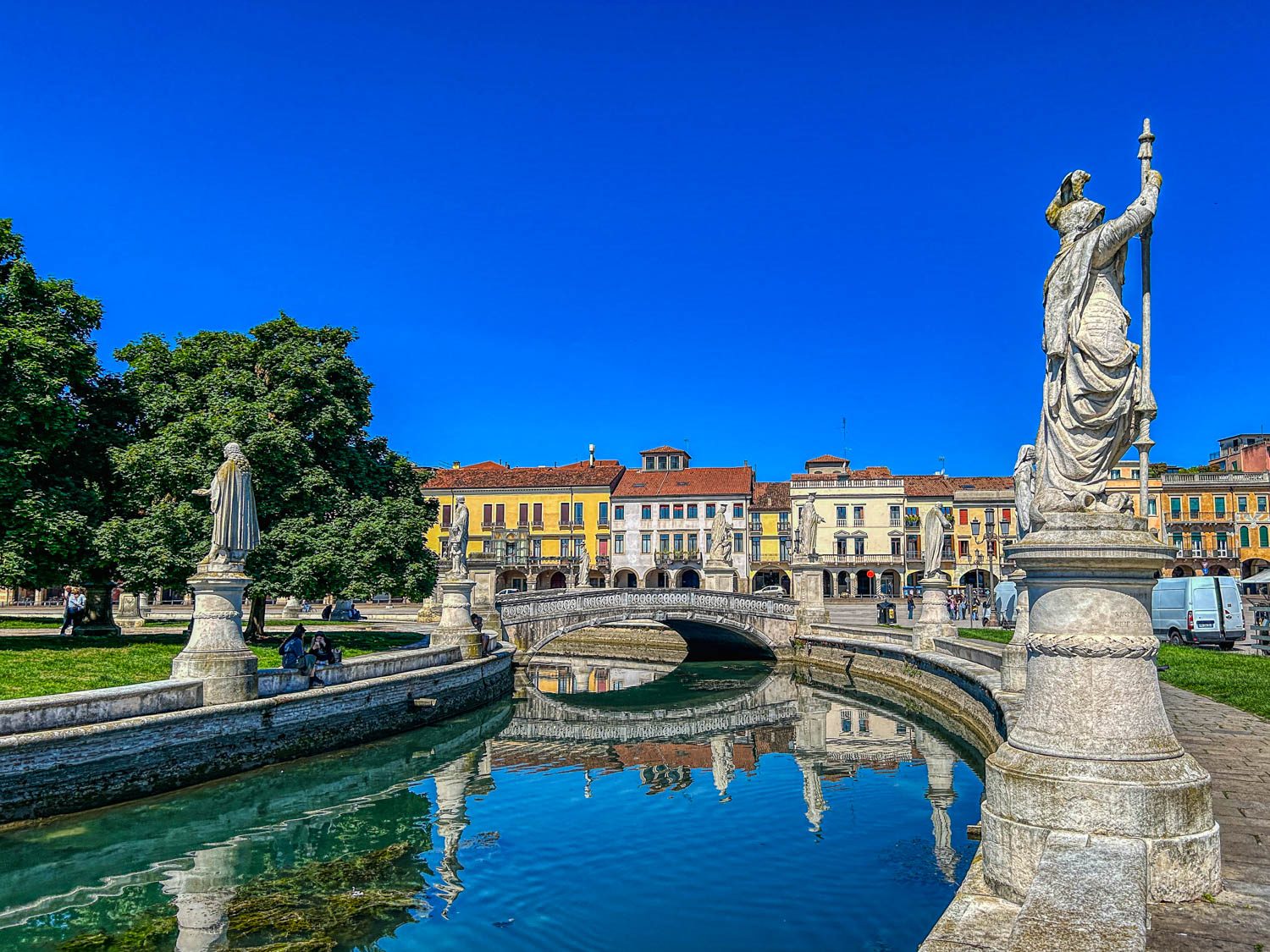
The Prato della Valle is a 90,000-square-meter elliptical piazza surrounded by a canal and many statues of Italian celebrities from the past (I've been told there are 78 of them). I saw Petrarch (poet), Galileo Galilei (scientist), Ludovico Ariosto (poet), Canova (sculptor), Tartini (composer), a few popes, and a bunch of names I had never heard before. Then I sat at one of the cafes around the square (is it still a square if it's elliptical?) and had a brioche and a cappuccino for breakfast. Side note: Italians never have cappuccino after lunch, because it's considered a morning beverage.
Prato della Valle
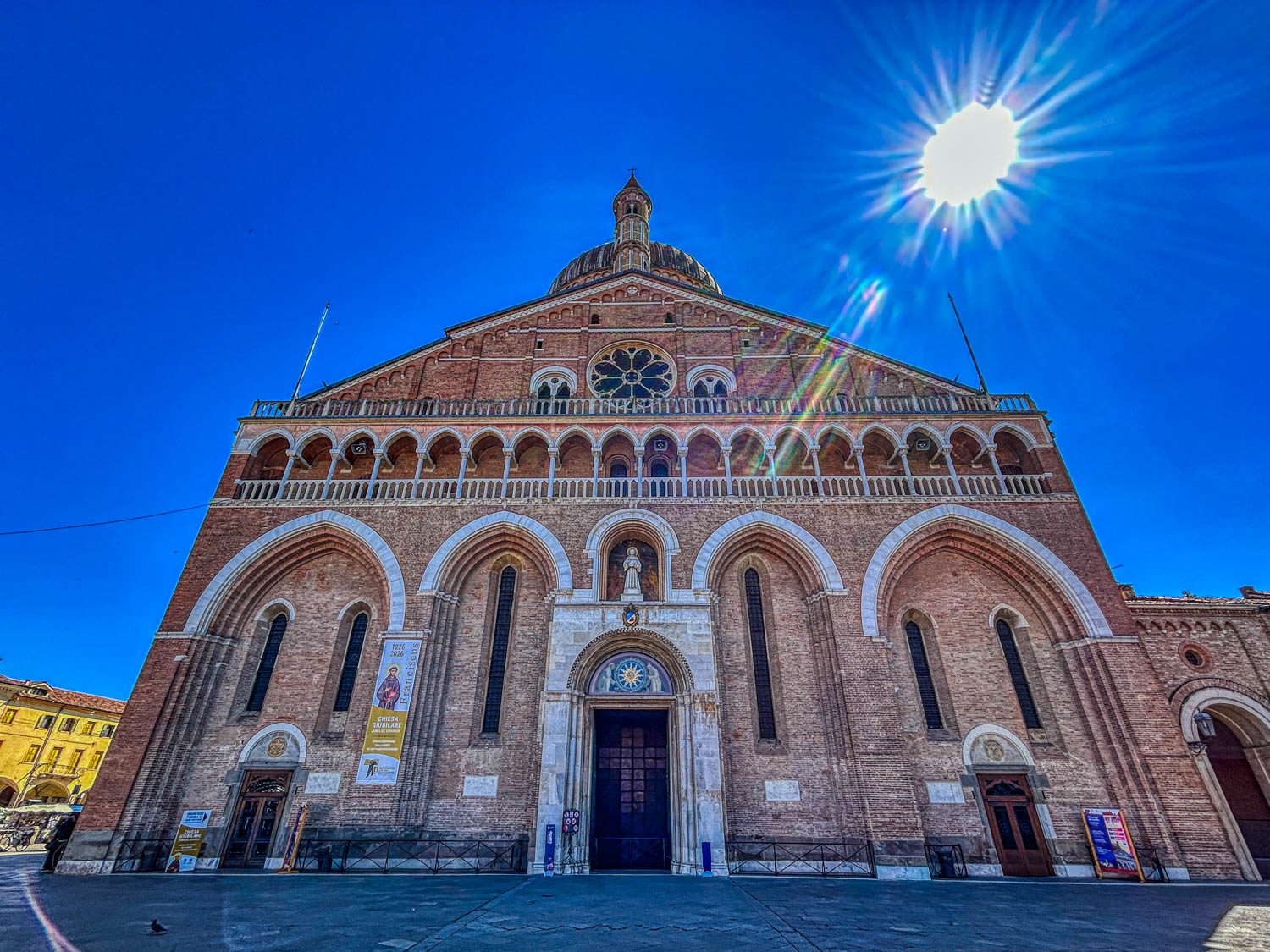
The Basilica Pontificia di Sant'Antonio di Padova has been there since 1310. The exterior looks Romanesque, and the interior looks Gothic. Donatello's horse should be right outside the church, but as I said, it wasn't.
Basilica Pontificia di Sant'Antonio di Padova
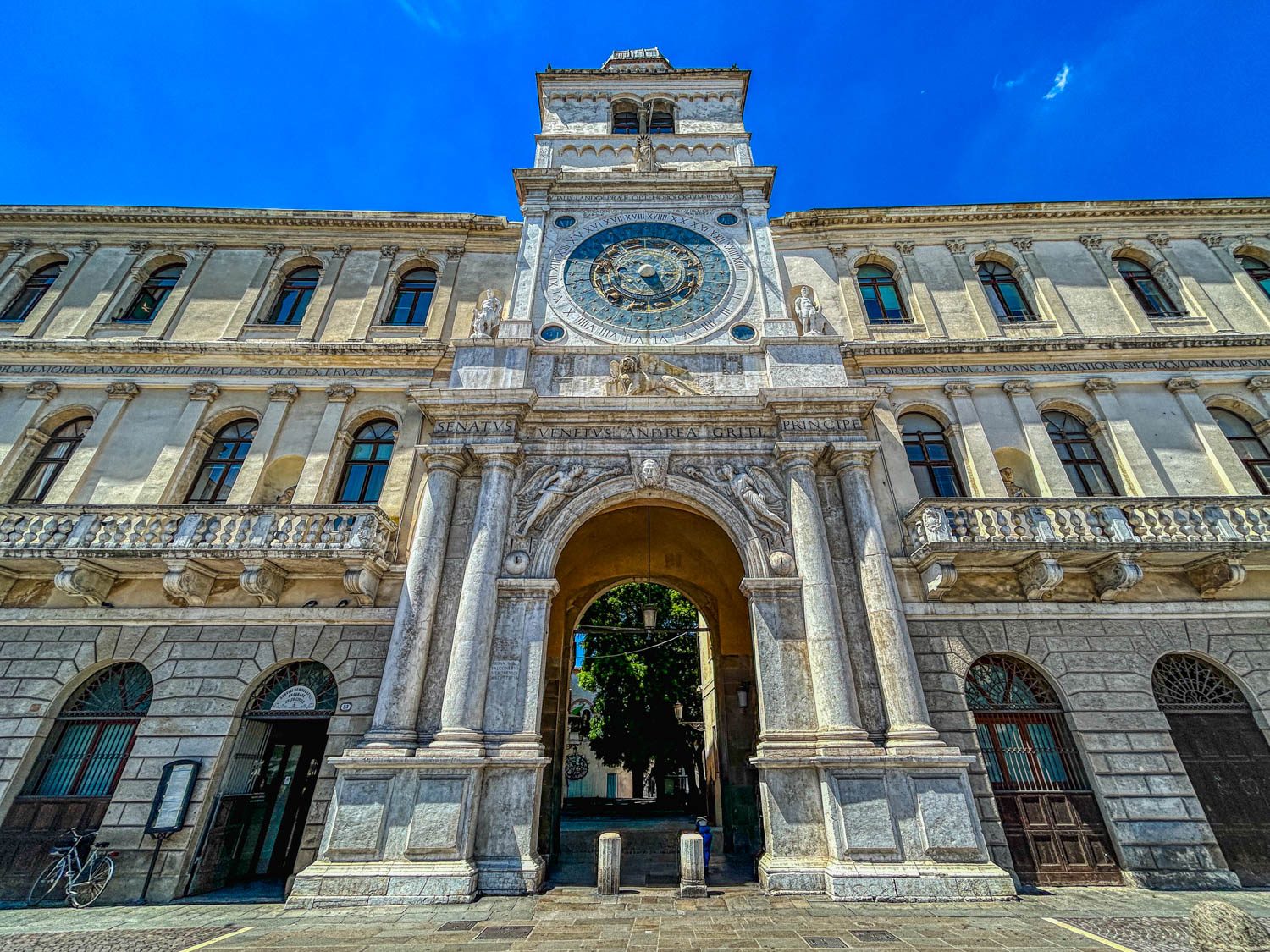
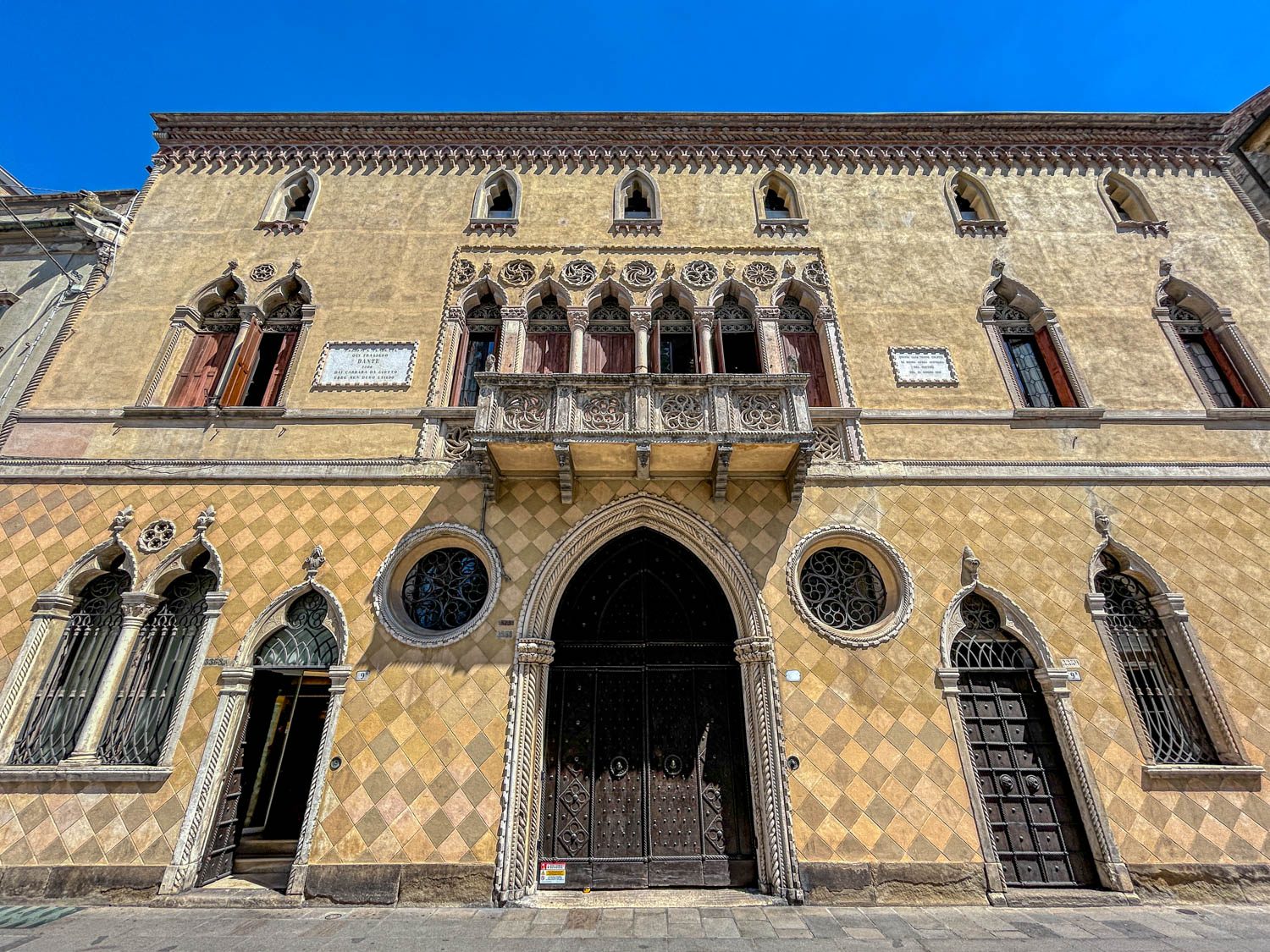
I walked around randomly, and found some very interesting buildings: the Palazzo del Bo (home of the University of Padua since 1493), the Palazzo della Ragione (combination of market hall and town hall, from 1219), and the Torre dell'Orologio (a tower with an astronomical clock built in 1344, which shows the hours, the months, lunar phases, and the sun's passage through the zodiac). I also saw the house where Dante Alighieri sought refuge after being exiled from Florence in 1302.
Torre dell'OrologioDante's exile house
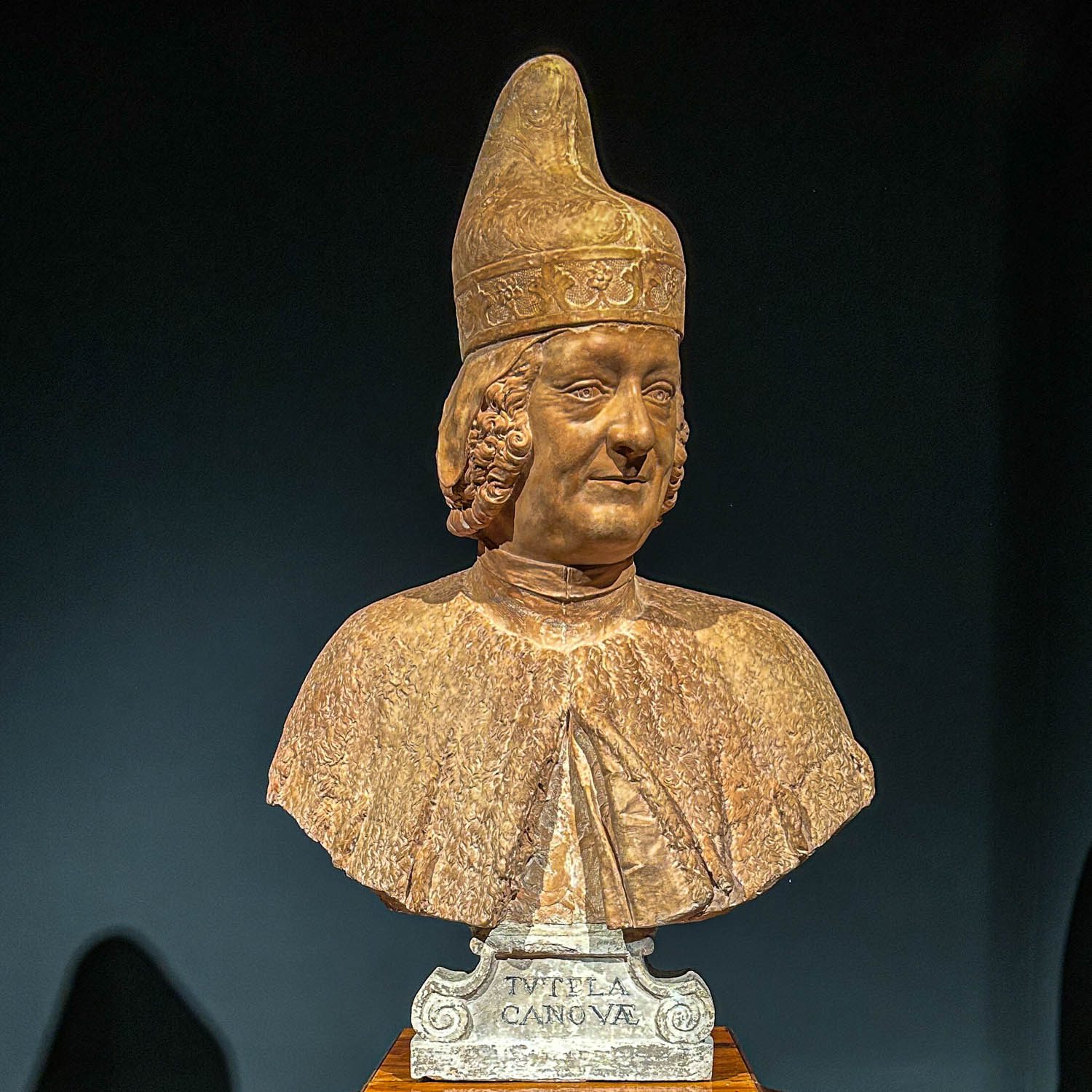
Obviously, I found a couple of museums too: the Eremitani Museum, which has an archeological collection and a painting collection, and the Palazzo Zuckermann, which contains a museum of decorative arts on the first floor and the eclectic Museo Bottacin on the second floor. One piece in particular had an amusing story. The Doge Paolo Renier promised an important position at the Basilica di San Marco to a nobleman named Angelo Querini. The man was so happy that he commissioned a terracotta bust of the doge from the young artist Antonio Canova (at the time, 22 years old). But then the doge went back on his word. Enraged, Querini placed the bust in the servants' latrine. A century later, his heirs found the statue in pieces and sold it to an antiquarian who restored it. Canova, of course, would become a famous sculptor, and the bust today is worth millions of dollars.
Doge Paolo Renier, by Antonio Canova
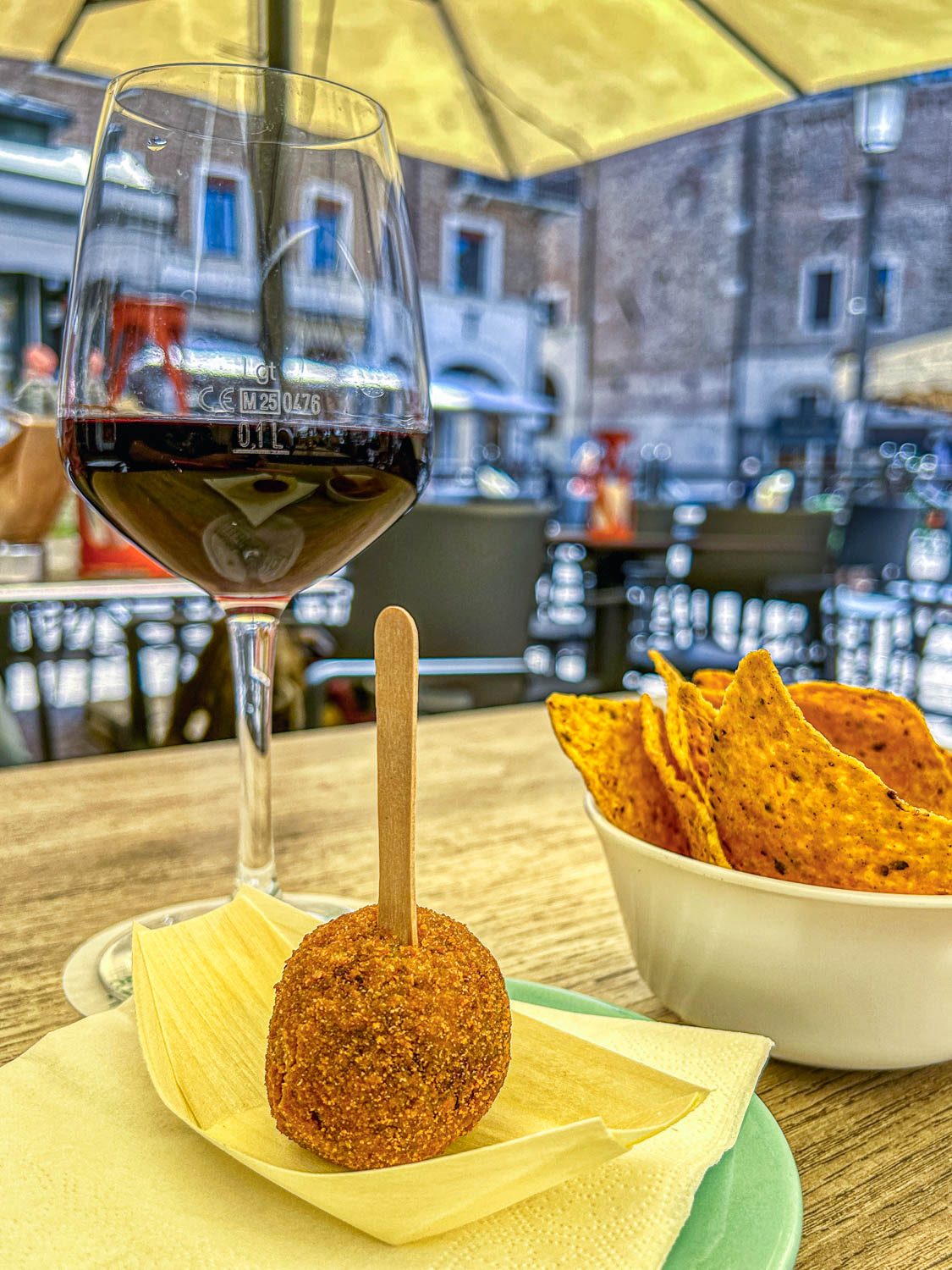
Since I was still full from the late breakfast, instead of lunch I just had a snack. In Italy, you can get meatballs in your pasta, or in a soup, or as hors d'oeuvres. That's what I got, a polpetta di carne accompanied by a glass of Trentino Pinot Nero. That was a pleasant day trip.
Polpetta
Vicenza
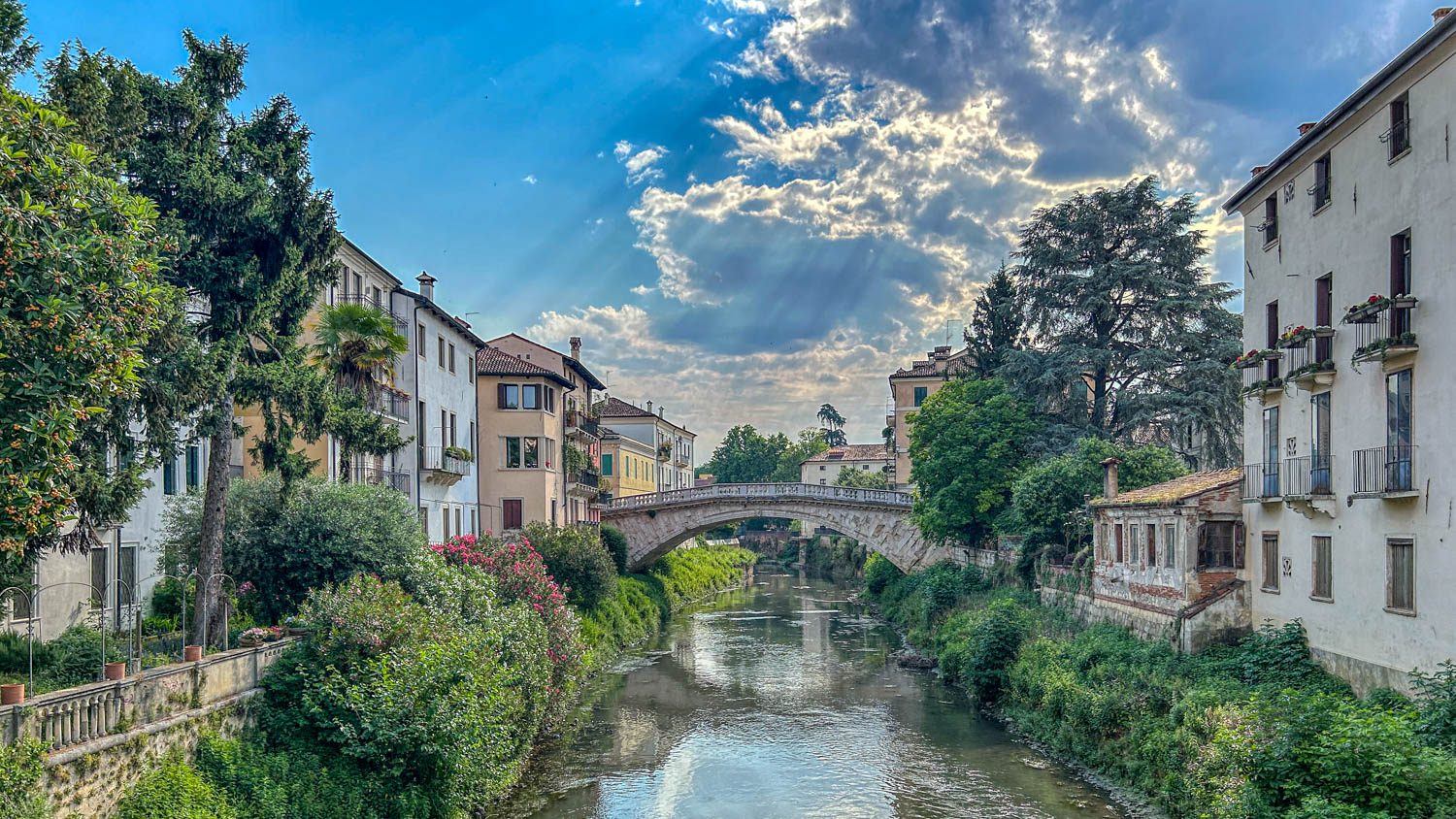
Andrea Palladio (1508-1580) was one of the most important architects in history. The designs he created during the Renaissance, inspired by classical Roman architecture, were a reference for a long time. Consider, for example, Monticello, Thomas Jefferson's estate near Charlottesville, in the USA, or Chiswick House, in west London, UK. Palladio was born in Padova, but it was in Vicenza (thanks to good sponsors) that he thrived. So I went there (forty-five minutes by train west of Venezia) to see some of his work, buildings I had only seen in drawings and photos.
Vicenza in the morning
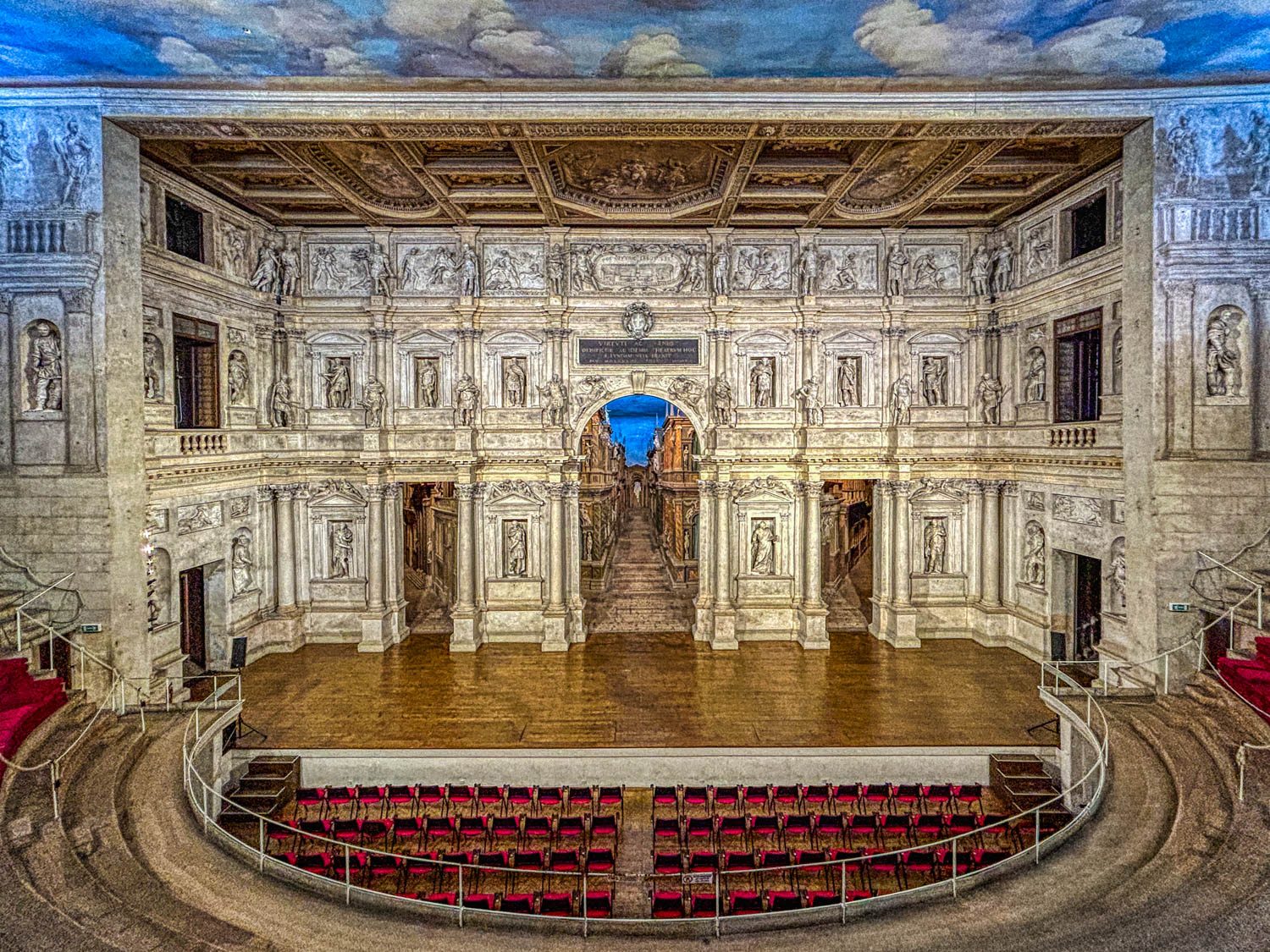
Vicenza is a pleasant little town (about 100,000 people). I started my tour with Palladio's last work, actually only finished after his death, the Teatro Olimpico (1580-1585). It has a beautiful stage, completed with a trompe-l'oeil onstage scenery, designed by Vincenzo Scamozzi, that gives the impression of streets receding to a horizon. That is the oldest surviving stage set in the world.
Teatro Olimpico
The Palladio Museum was a bit disappointing. It only has a few models of his work, and that's all. Fortunately, the city has plenty of real buildings he designed.
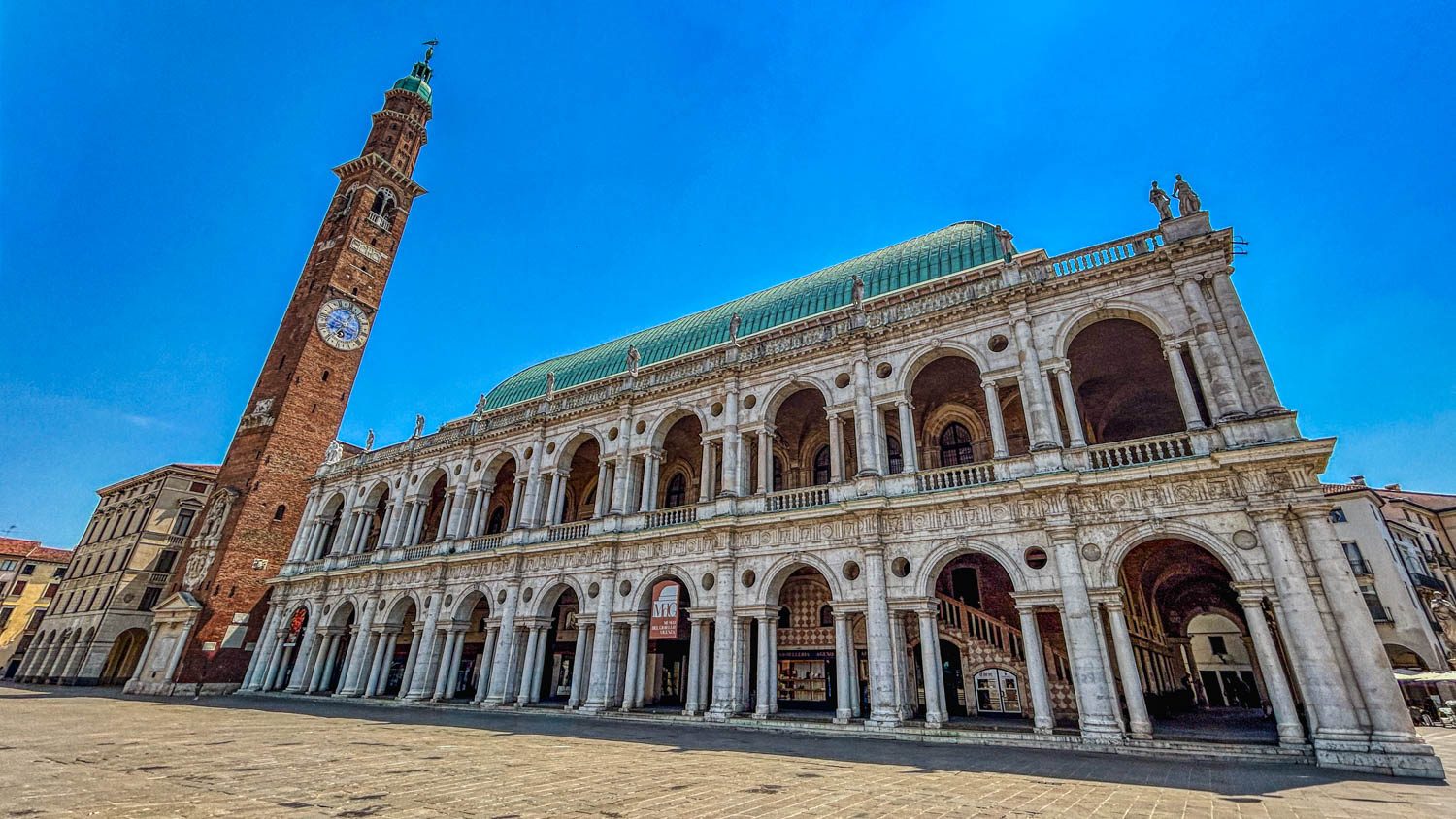
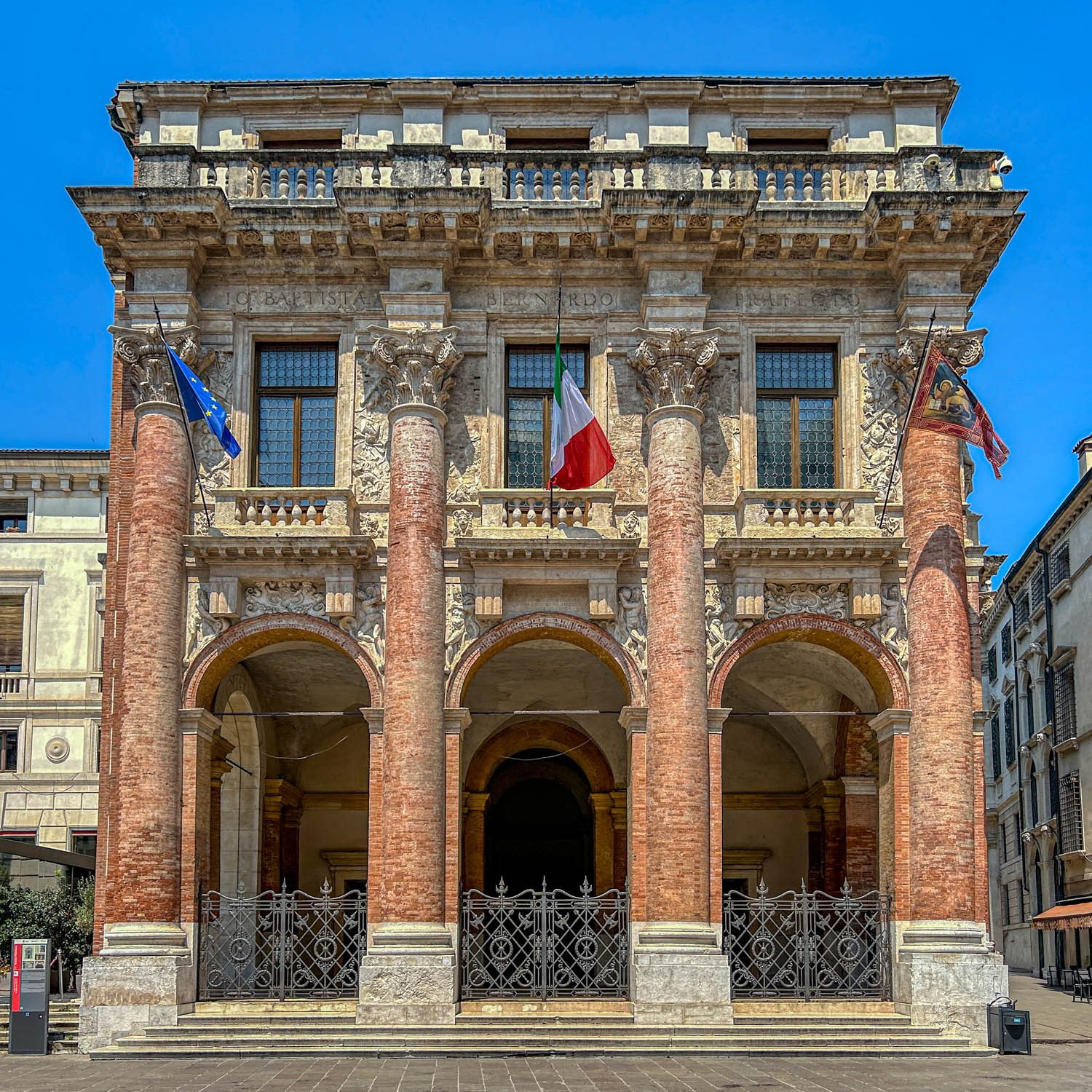
In the Piazza dei Signori, you can find the large Basilica Palladiana and the smaller Loggia del Capitanato. The Basilica, also known as Palazzo della Ragione, was originally a 15th-century Gothic building, but it collapsed. The city hired Palladio to rebuild it, and he did it in the style of the ancient Roman basilicas. That construction took a long time, from 1549 to 1614. Palladio had been dead for thirty years when they finished it. The Loggia was built right in front of the Basilica, and Palladio decided to create a contrast to the clear lines of the other building by using much more elaborate decoration (especially the columns, which mix Ionic and Corinthian). Over time, the contrast grew with the color too, as the white stucco covering the columns peeled off and revealed the red bricks underneath. On the same Piazza dei Signori, there's also the 82-meter-high Torre Bissara, from the 12th century.
Basilica Palladiana (and the Torre Bissara)Loggia del Capitanato
The Parco Querini has a 1820 monopteron created by Antonio Piovene, inspired by Palladio. A monopteron is a circular colonnade supporting a (usually domed) roof but without any walls. You can call it a gazebo if you want. This one was placed on an artificial island in the park, in the center of a pond full of turtles. And I also saw a nutria there, swimming among the turtles (it looks like a small aquatic capybara, but I don't think they are related).
Parco Querini
The Chiesa di Santa Corona has a somewhat hidden underground crypt, which includes the Valmarana Chapel, designed by Palladio. The church also has large paintings by Bellini (The Baptism of Christ) and Veronese (The Adoration of the Magi), among several others.
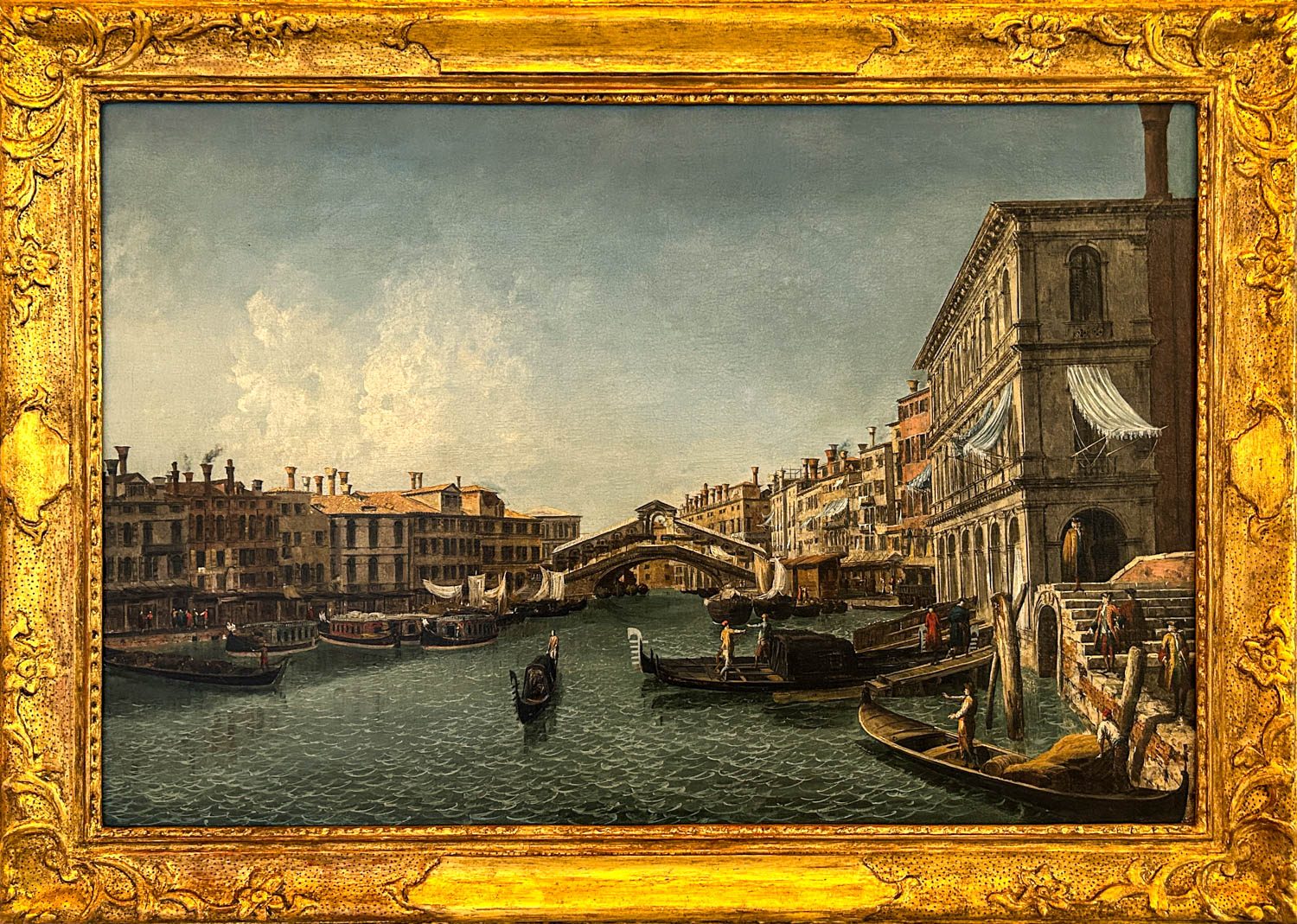
But the real treasure cave for art lovers is the Gallerie d'Italia, located in the baroque Palazzo Leoni Montanari. The collection starts with hundreds of Russian religious icons, and then progresses through Venetian art (that's the whole Veneto region, not just Venezia) of various epochs. I particularly enjoyed the set of vedutismo paintings, which included not only the great Canaletto and his follower Francesco Guardi but also many other names you rarely hear about. Vedutismo (from the Italian "veduta", meaning "view") is an art genre dedicated to extremely detailed paintings of cityscapes, made possible by the use of optical devices like the camera obscura, which allowed the artist to trace intricate architecture and paint it very realistically on the canvas. Canaletto was the master of that style.
Veduta del Canal Grande (1740), by Michele Marieschi
The Museo Civico di Palazzo Chiericati also has quite a few treasures, including works by Bassano, Tintoretto, Veronese, Giordano, Tiepolo, and many others.
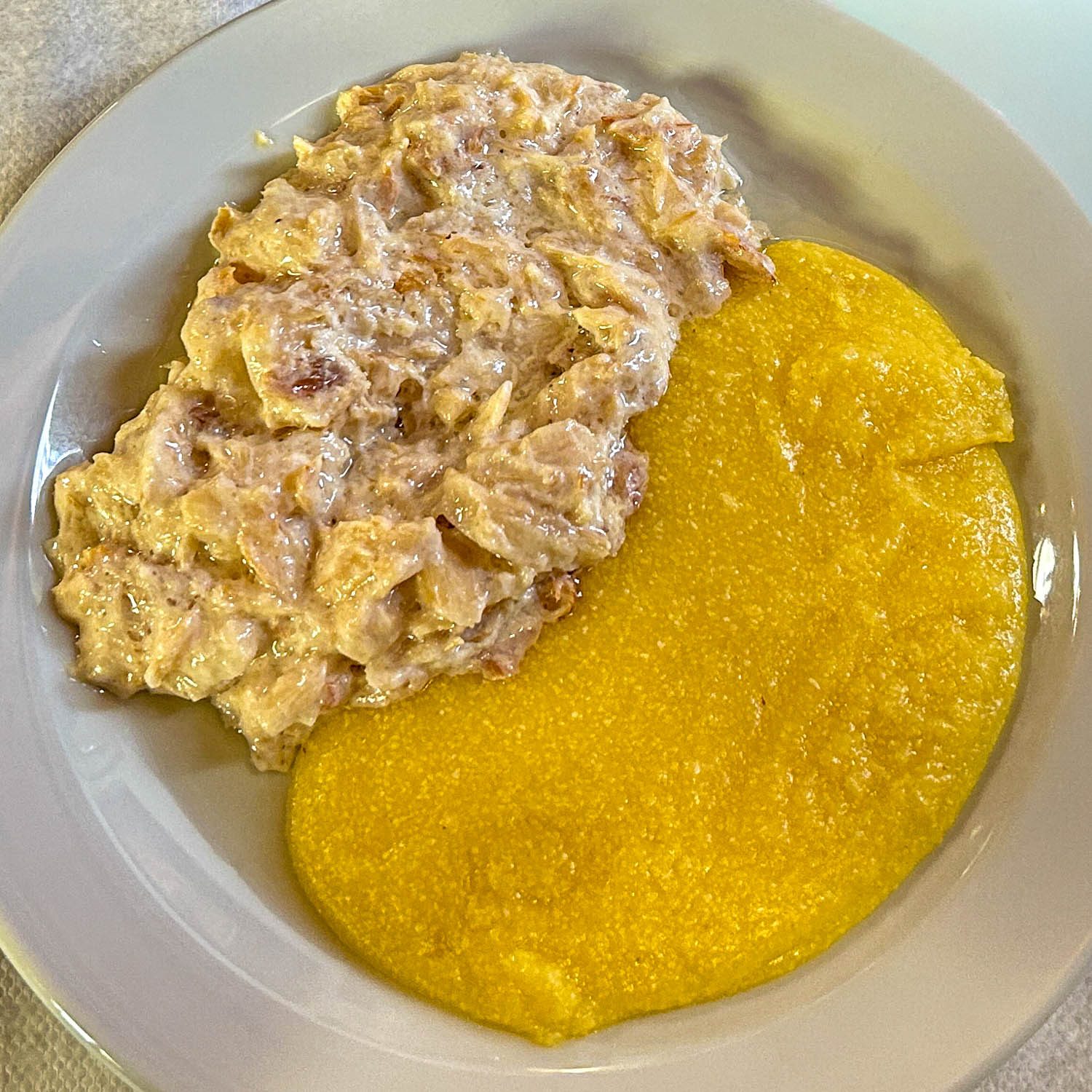
For my lunch in Vicenza, I did a little research and found a restaurant where the locals eat, Righetti. I had a traditional dish of the city, baccalà alla vicentina. It's dried cod braised in milk, which generates a creamy sauce, served with soft polenta. It's not pretty but it's tasty.
Baccalà alla vicentina
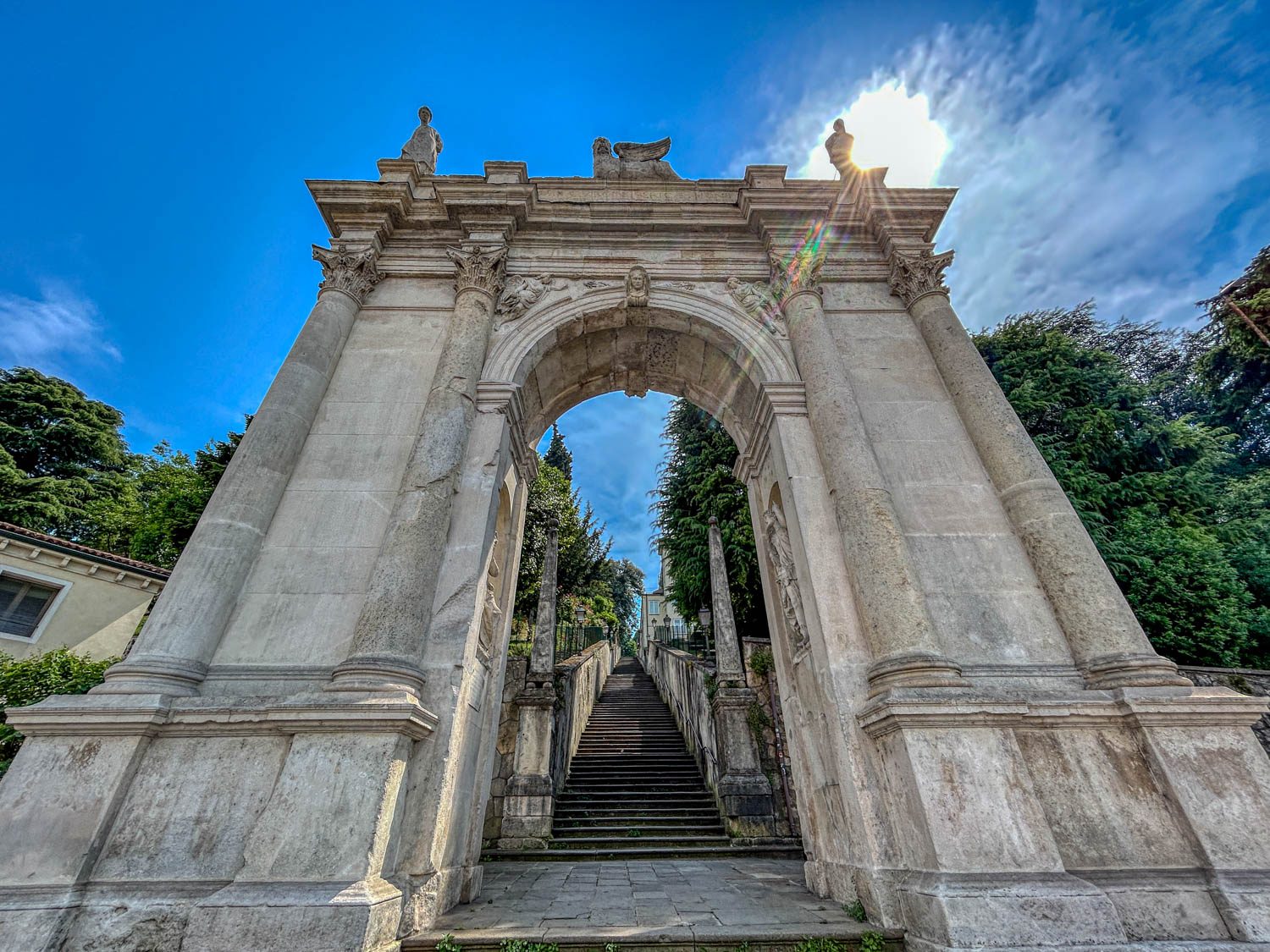
The last Palladio work I saw was the Arco delle Scalette ("arch of the little stairs"), built in 1596. Fortunately, I didn't have to climb those stairs. However, while walking around that area, I stepped on what looked like a flat surface but was actually half sidewalk and half street, with a height difference of about 10 cm between the two. My ankle twisted in a way ankles are not supposed to twist. Not enough for a ligament rupture, but enough to cause a nasty pain that kept me limping for a few days.
Arco delle Scalette
And after Venezia?
In a few days, I will move to Foz do Arelho, in Portugal. Where's that? I'll tell you next time. Até breve!