
I rented a small apartment in Vientiane, the capital of Laos. From my little balcony, I can see the Mekong River in the distance and, on the other side, Thailand. Yes, it's a long river: it flows from Tibet through China, Burma, Laos, Thailand, Cambodia, and Vietnam to the South China Sea.
Many place names in Southeast Asia come from the French colonialists not understanding what the locals were saying. Cambodia, for example, comes from the French word Cambodge, which is the way they managed to write the Khmer word Kampuchea. The same happened with Vientiane, which in the original Lao was Viangchan, which can be translated as "walled city of the moon".
Despite being the capital, Vientiane is not a large city (840,000 people) and feels like it's even smaller. Still, for its size, there are a few attractions worth exploring.

Pha That Luang is the most cherished monument in the city. It's a Buddhist golden stupa supposedly holding a relic, the breastbone of Buddha. But since nobody can go inside, what's there remains a mystery. It dates to the 3rd century BCE, but it was rebuilt several times due to many wars in the area. The current version is from the 1930s, based on the original design from 1566.
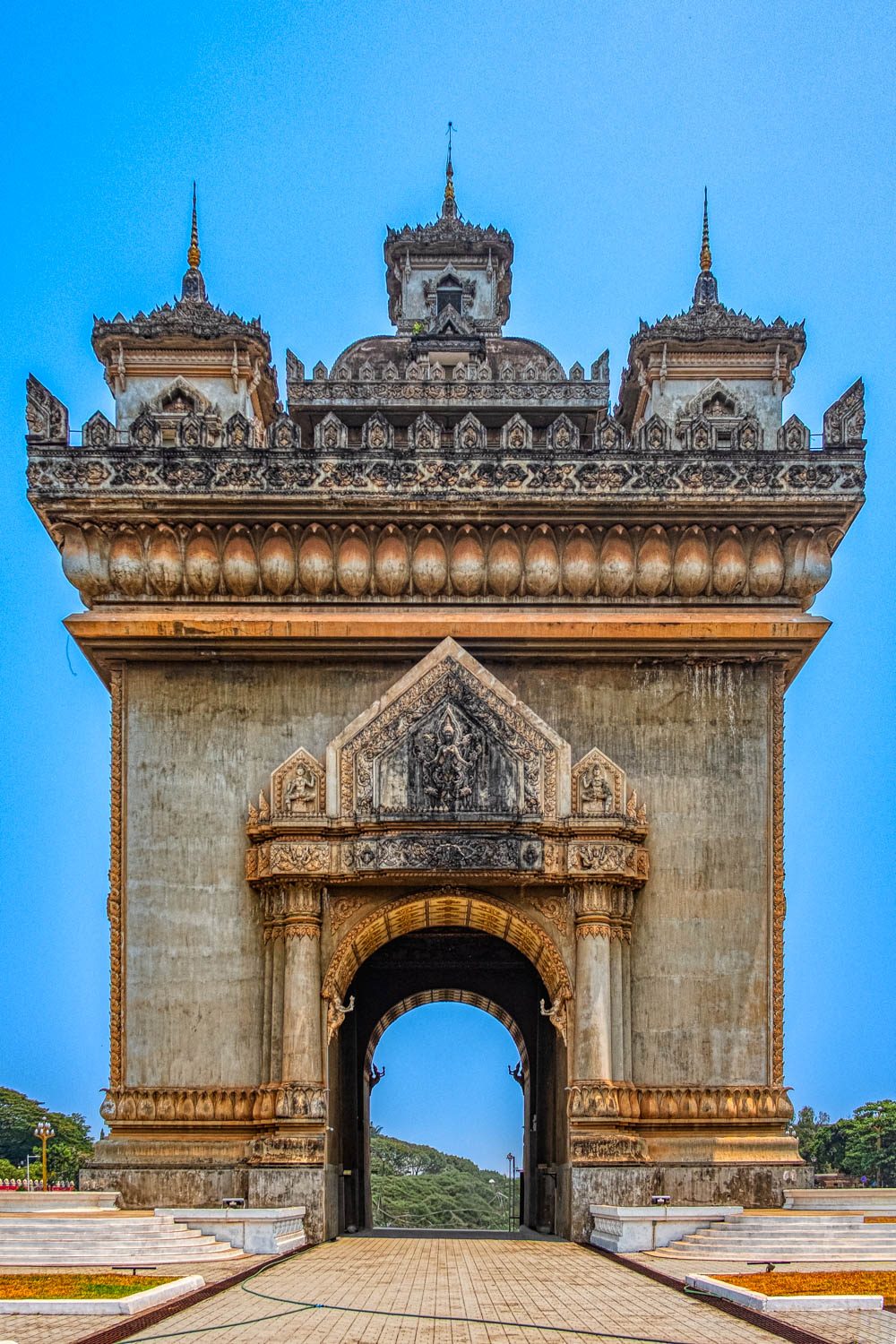
The Patuxay Monument (pronounced "Patussai") is the Laotian Arc de Triomphe, built intermittently between 1957 and 1968 by the Laotian monarchy to celebrate the soldiers who died in the war of independence from France. But then in 1975, when the Lao People's Liberation Army overthrew the king, they named it Patuxay ("victory gate") to celebrate their own accomplishment.
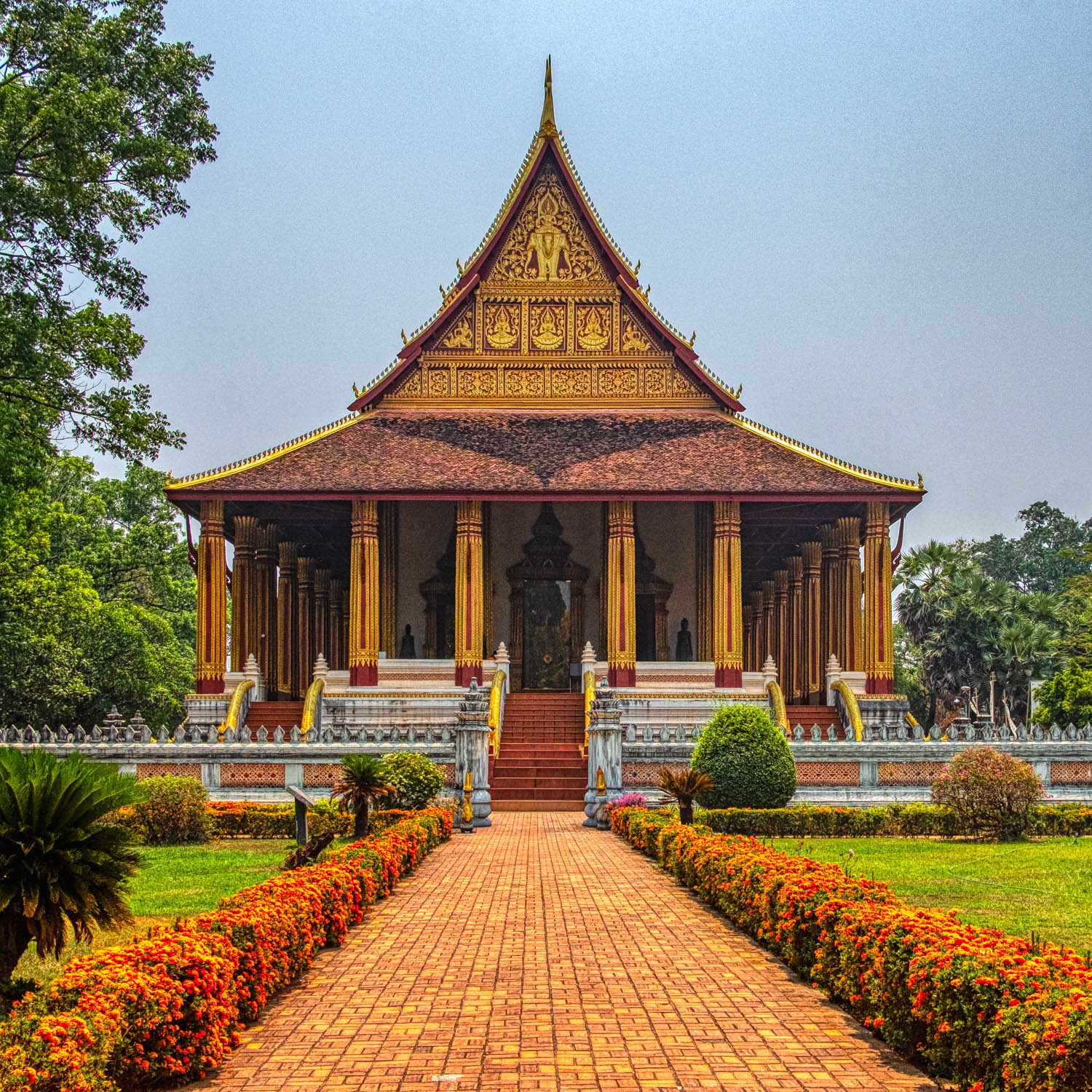
Haw Phra Kaew was the Buddhist temple built to house the famous Emerald Buddha (which is actually made of jade and not emeralds). The statue was first found in Thailand in 1434 and moved a few times from kingdom to kingdom, ending up in what is today Laos. It stayed in Vientiane for 214 years, until Thailand (then called Siam) invaded the city and sent the statue to Bangkok, where it has remained at Wat Phra Kaew (Temple of the Emerald Buddha) ever since. I saw it there two years ago. Haw Phra Kaew, in Vientiane, became a museum full of Buddha statues (except the emerald one).

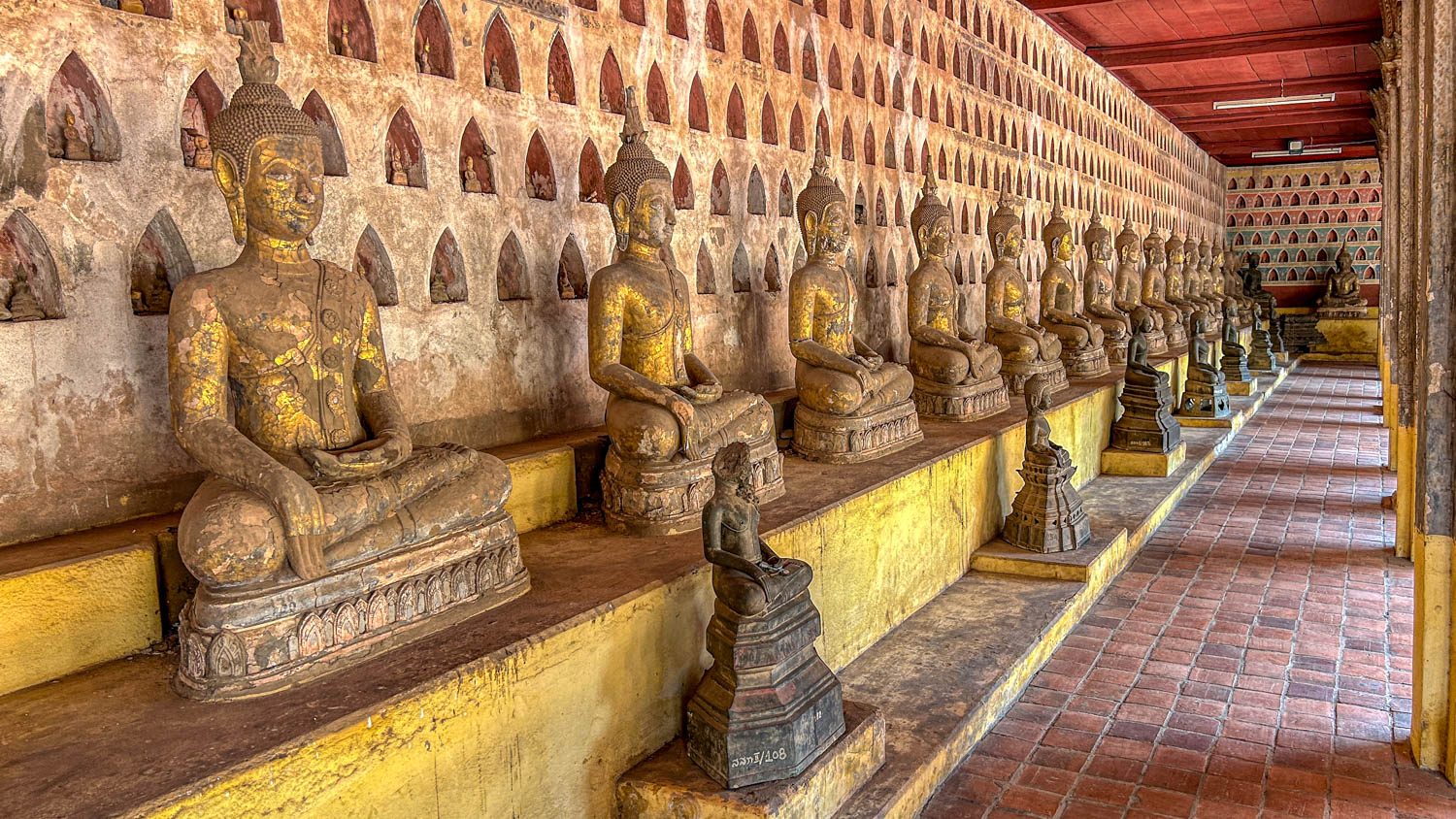
Wat Si Saket is another Buddhist temple, from 1818, also full of Buddha statues, about two thousand of them.
That Dam is a stupa with a legend behind it (or under it). The locals believe that underneath there is a well that connects to the Mekong River, and through there a naga (half-human, half-serpent entity) comes and goes to protect the city from invasion. The naga is probably not doing a good job, since Vientiane has been invaded by the Siamese (several times), the Chinese, the Japanese, the French, and the Vietnamese.

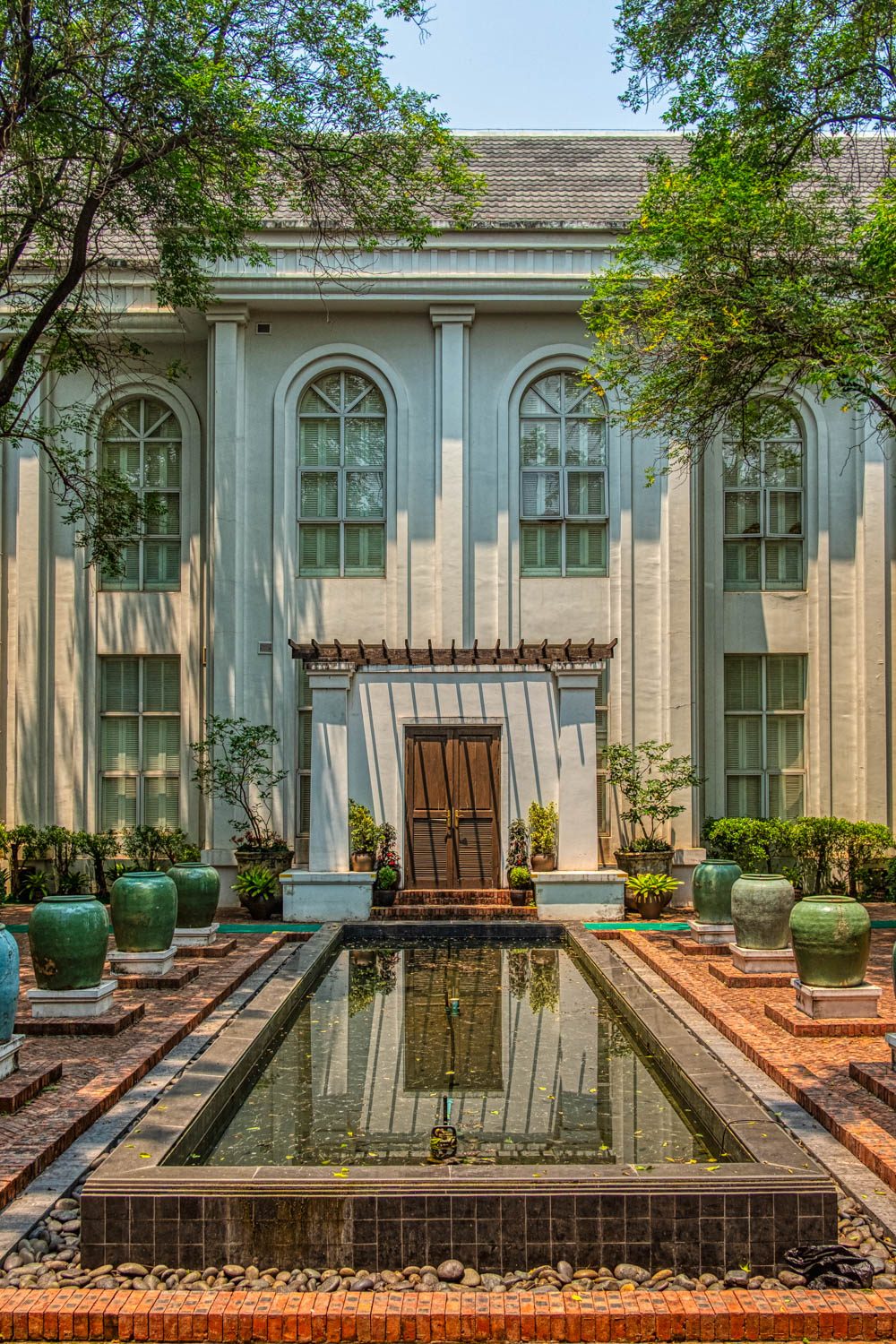
I also visited the Traditional Lao Silk Residence, which is a textile museum specializing in silk. The main attraction for me was the building itself, a French colonial villa from the beginning of the 20th century.
Any side trips?
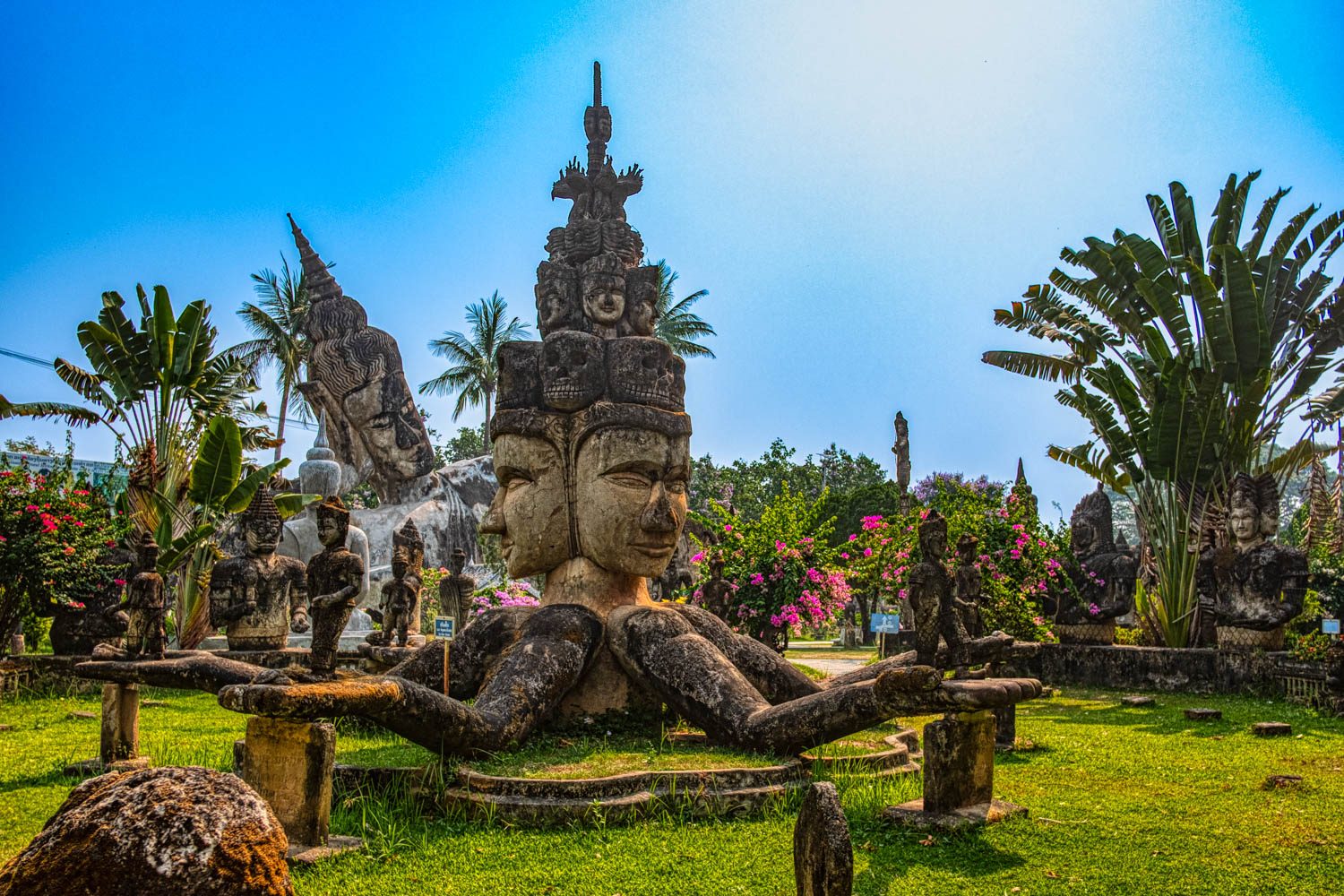
I went about 25 km east of Vientiane to visit the Buddha Park. It's a sculpture park along the Mekong River, featuring over 200 Hindu and Buddhist statues. What makes it interesting is the agglomeration, not the artistry. The statues are made of concrete, and date from the late fifties to the mid-seventies.
And the food?
My gastronomic experience in Laos was quite unremarkable. During my walks around Vientiane, I couldn't find a single restaurant serving Lao food (I'm not counting the multiple carts serving street food, because I don't eat in places without running water). Chinese restaurants dominate the scene, particularly hot pot restaurants: there's a small stove on your table, with a simmering soup on it, where you dip the raw meats and vegetables they bring. It's an inferior version of Japanese shabu-shabu, because the meat isn't great and there is no rich buffet to accompany it like in Japan. Just in the small shopping mall in front of my building there were four of these restaurants.
Then there are the international chains. I ate a mediocre burger with mediocre fries at Lotteria (chain from South Korea), an average pizza at The Pizza Company (chain from Thailand), and a forgettable soy sauce chicken with rice at Hawker Chan (chain from Singapore). After that I just started buying ingredients at the supermarket and cooking at home.
And after Vientiane?
I'm already back in Europe. More specifically, in Greece. Even more specifically, in the South Aegean Sea. More specific than that? I'll tell you next time. Yassou! (That's "bye" in Greek. It's also "hello".)
