
Tokyo is one of the largest cities in the world, with roughly forty million people in its urban area. For comparison, using the same counting method, São Paulo is a bit over twenty million and Los Angeles around fifteen million. Officially, Tokyo is classified as a "metropolis prefecture" and is divided into special wards that have their own mayor and city council. The actual Tokyo Metropolitan Government, which administers the whole metropolis, doesn't have a mayor, it has a governor.
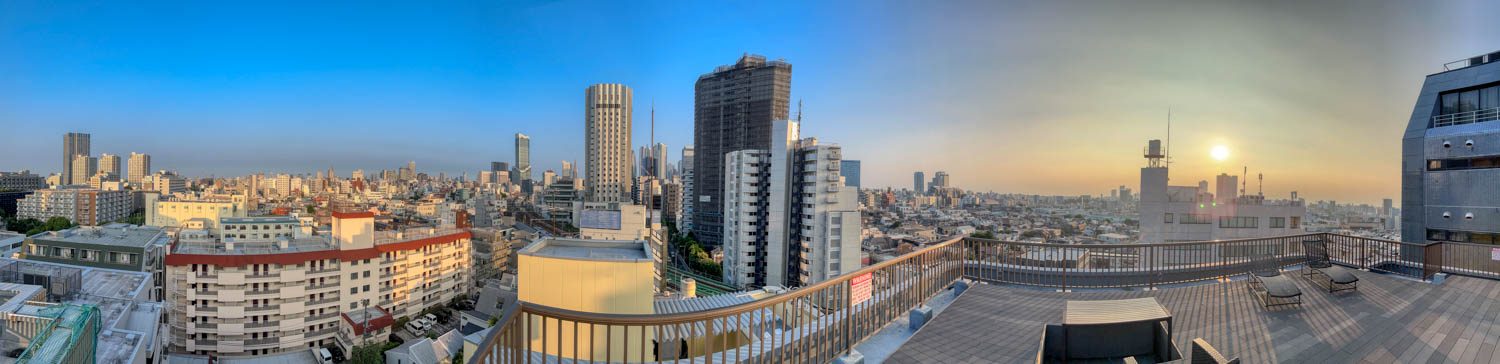
I rented an apartment in the Shinjuku ward, more specifically in the Hyakunincho neighborhood. The name means literally "one hundred people". In 1596, the shogun created a special unit of one hundred samurai just to protect Edo Castle, and he offered this area to them as a place of residence. It's still called Hyakunincho in their honor. It's a calmer residential area, but not very far from the buzzing region around the train station. The Shinjuku Station is the busiest train station in the world, serving close to four million people every day, and looks almost like a city in itself, with more than fifty train platforms, countless labyrinthic hallways, hundreds of little shops, underground connections to at least half a dozen shopping malls, and over two hundred exit gates. And, of course, unbelievably large and never-ending crowds.
Tokyo has an exceptional transport system, a complex network of trains, subways, and buses, operated by multiple private and public companies. It's one of the most efficient, extensive, and punctual in the world. The rail system is the backbone, with trains arriving every few minutes and connecting virtually every part of the city and beyond. Rush hour congestion can be intense, but overall, the system is clean, safe, and remarkably reliable.

Parks and temples
Despite all the busy train stations, the constant noise from trucks playing loud jingles, and the flashing neon advertisements that light up entire districts, Tokyo also has surprising oases of calm. There are several large parks sprinkled around the city, where the chaos seems to melt away and get replaced by the quiet rustle of trees, still ponds, and the slow pace of strolling visitors.
Not far from my apartment, there is the Shinjuku Gyo-en. As expected, it has a beautiful Japanese traditional garden, with ponds and bridges and carefully tended vegetation. But it also has a French-style garden, an English-style garden, a greenhouse with tropical plants, and even a little forest called "Haha to ko no mori" ("Mother and Child Forest"), with about 20,000 trees.


The Oiwa-Inari Tamiya shrine has a ghost story associated with it. A husband killed his wife so he could marry another woman. Then he started seeing his wife's ghost following him around. Eventually, the ghost replaced the new wife's face with hers, and the husband killed his new wife, thinking he was killing the ghost. When he realized what had happened, he jumped off a cliff. To quiet the vengeful ghost, her family built the Oiwa-Inari Tamiya. It's not a true story, but it's a compelling one. Retold thousands of times, it became a kabuki play and inspired several movies.
One last story. A feudal lord was forced to commit ritual suicide (seppuku) for threatening a court official who had insulted him. His loyal samurai decided to avenge his honor and killed the court official (and everyone in his house), and delivered his severed head to their dead master's grave. Afterwards, they all committed ritual suicide as well, and became known as The 47 Samurai or The 47 Ronin (a samurai without a master). This one is a true story, and was also portrayed in literature and several movies. I visited the graves of these samurai, who are buried at the temple known as Sengaku-ji.
I also visited the Koishikawa Korakuen Garden, the Kyu-Yasuda Gardens, the small Yokoamicho Park, the Kiyosumi Gardens, the Hamarikyu Gardens, and the Otaguro Park.


And the museums?
Yes. Tokyo is home to more than one hundred museums. I visited a few of them.
The Tokyo National Museum, located in Ueno Park, is a vast institution comprising several buildings and a spacious garden. Just the garden is worth the visit, with historic tea houses and a pond. One of the tea houses is still operating and I had lunch there: salmon and smoked mackerel onigiri, with miso soup and homemade pickles. The museum displays a collection of hundreds of objects from Ancient Japan, including ceramics, sculpture, painting, furniture, jewelry, coins, and calligraphy. They also had a special exhibition of ukiyo-e (woodblock prints) made by modern artists.


The Tokyo Metropolitan Art Museum, also in Ueno Park, had a large Miró exhibition, with many works I had never seen. Occasionally, these retrospective shows manage to borrow paintings that are hidden away in private collections, and this was the case here. It was a great continuation of my visit to the Joan Miró Foundation in Barcelona last year.
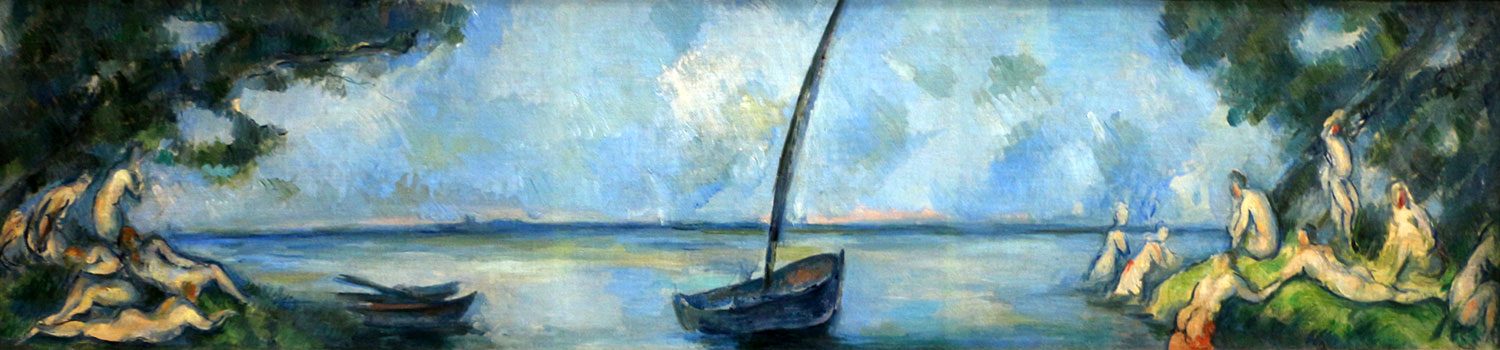
At the Mitsubishi Ichigokan Museum, they had an exhibition comparing paintings by Renoir and Cézanne side by side. Cézanne always wins in the comparison, of course. The museum also had another exhibition of Western art, Modern French Landscape Paintings - From Corot to Matisse.
Another very famous Japanese artist is Yayoi Kusama, also known as the woman who paints polka dots, and I visited her museum, which is, not surprisingly, full of polka dots.
The Yoku Moku Museum has a collection of Picasso ceramics from his time in Vallauris (I visited his studio there when I was living in Nice). The Artizon Museum has a good collection of early 20th-century Western art: Sisley, Pissarro, Cézanne, Gauguin, Matisse, Renoir, Klee, Picasso, Miró, and several others.
At the National Art Center, I saw the architecture exhibition Living Modernity, with works by Mies van der Rohe, Frank Gehry, Lina Bo Bardi, Alvar Aalto, Kameki Tsuchiura, Koji Fujii, and others.
The Yamatane Museum of Art had an exhibition of Uemura Shōen, a 20th-century Japanese artist who painted beautiful women on silk. The Asakura Museum of Sculpture is the exceptional house-atelier of Japanese sculptor Fumio Asakura. I wish I could live in a house like that, with traditional Japanese-style rooms around a central garden and a relaxing pond full of koi.
At the Sato Sakura Museum, there was a Japanese contemporary art exhibition. I also visited the Tokyo Photographic Art Museum, the Museum of Contemporary Art Tokyo, the Japanese Sword Museum, the Miyamoto-Unosuke Drum Museum, the Suginami Animation Museum, and the Ad Museum Tokyo.

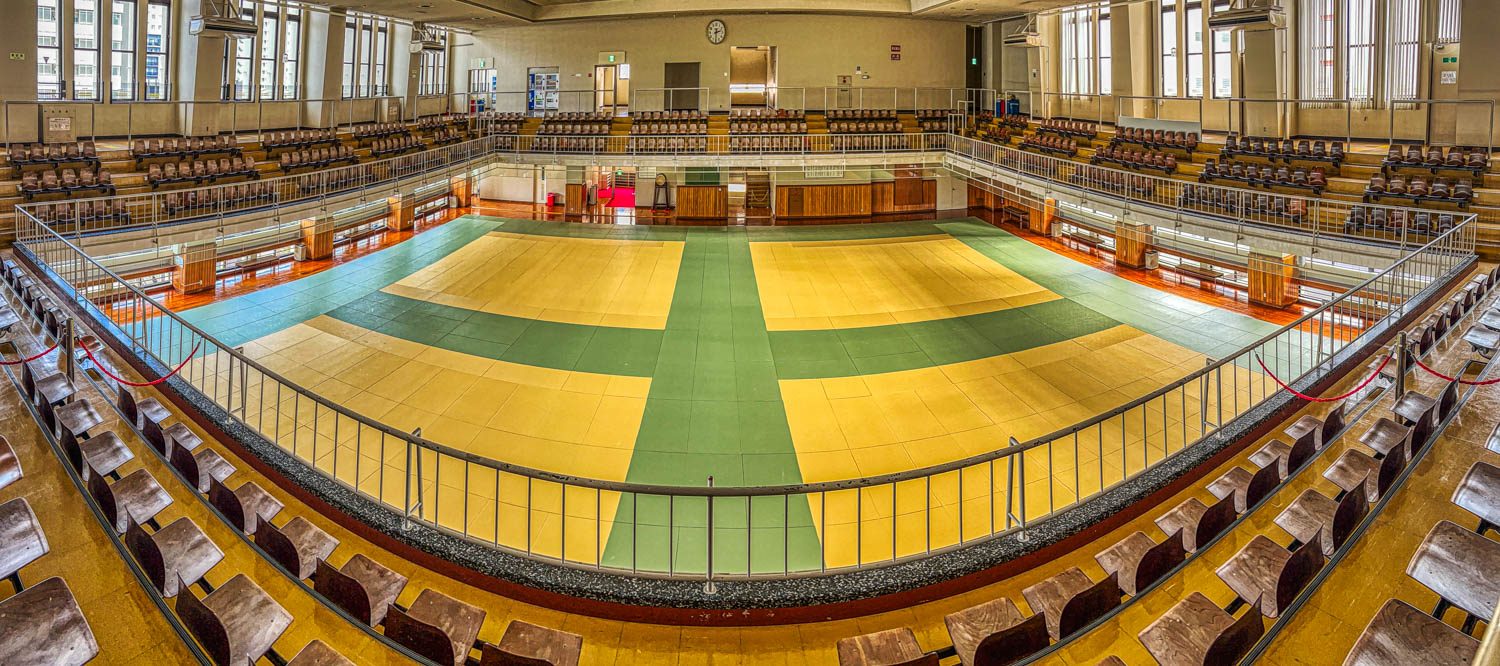
I practiced judo through my teenage years, and I always said that one day I would visit the Kodokan, headquarters of the worldwide judo community, founded by Jigoro Kano. Well, many years later, that day arrived. They have a small Kodokan Judo Museum, but I sneaked to the seventh floor of the building, which was empty at the time, to see the famous main dojo. Magical.

Palaces and castles
The Akasaka Palace is where the government of Japan hosts important international visitors, like US president Donald Trump in 2017 and Brazil's president Luiz Inacio Lula da Silva in 2025. It's a sumptuous palace built in 1909 in the very Western Neo-Baroque style.


Taiko
I am a big admirer of taiko (Japanese drumming), and was lucky enough to watch both Wadaiko Yamato and Kodo Taiko when they played in Washington DC (in 2007 and 2009, respectively). Here in Tokyo it wasn't easy to find a taiko show (they usually don't play during the Summer), but I managed to watch Drum Tao, a young and vibrant group. Great show.
Earthquake!
Ah, yes, I experienced two minor earthquakes in Tokyo. On Friday 13th of June, magnitude 4.2. On Tuesday 15th of July, magnitude 4.8. On both occasions, it was enough to make everything shake in my 10th-floor apartment.
What about the food?
Well, this newsletter is already too long, and there's so much to talk about Japanese food, so I will leave that for a second part, which I will send out in the next couple of days. Talk to you soon!
