This is my first time in Morocco and my first time in Africa. Now I have lived in all six inhabited continents (and no, I'm not planning to live in Antarctica with the penguins).
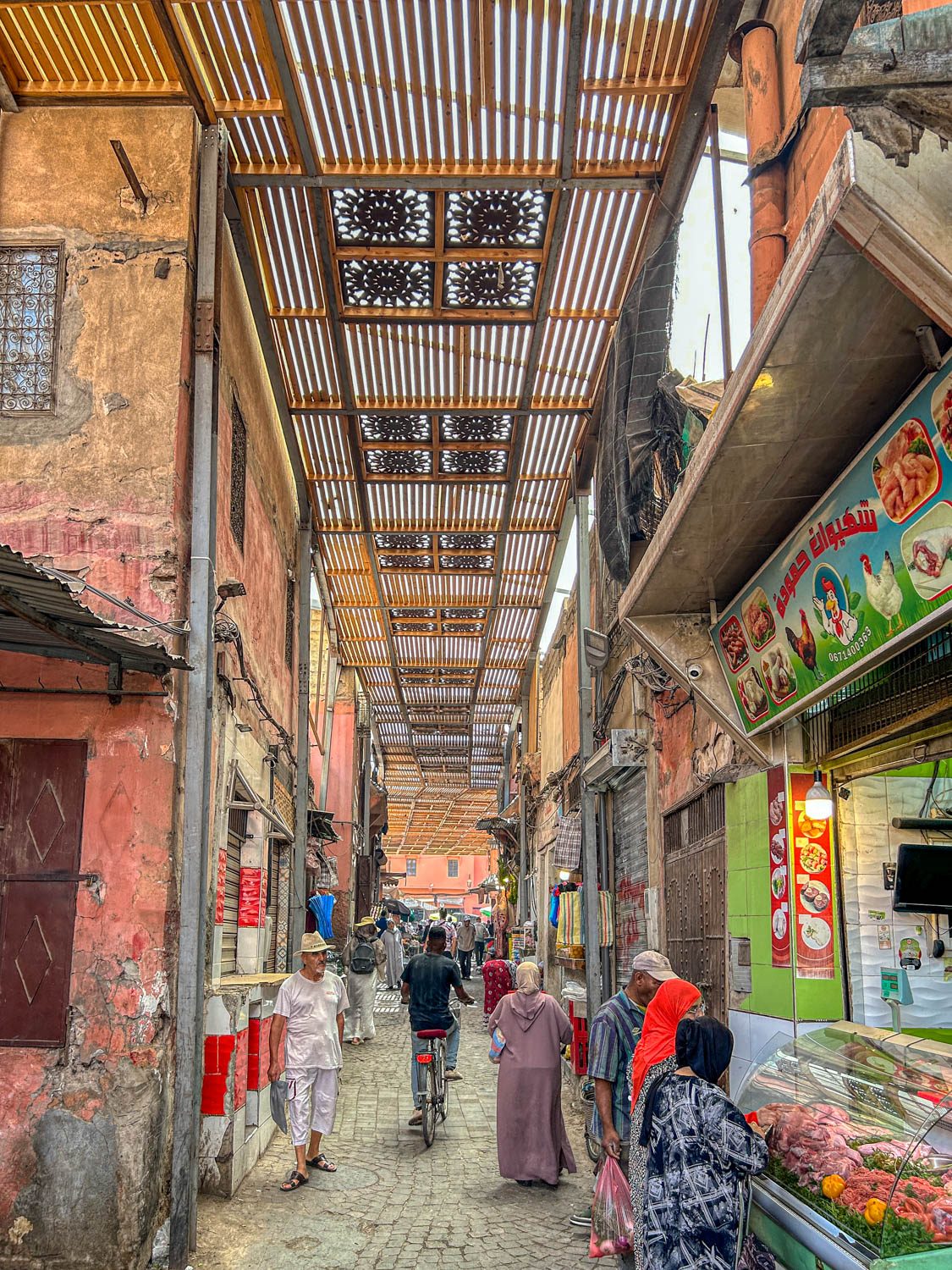
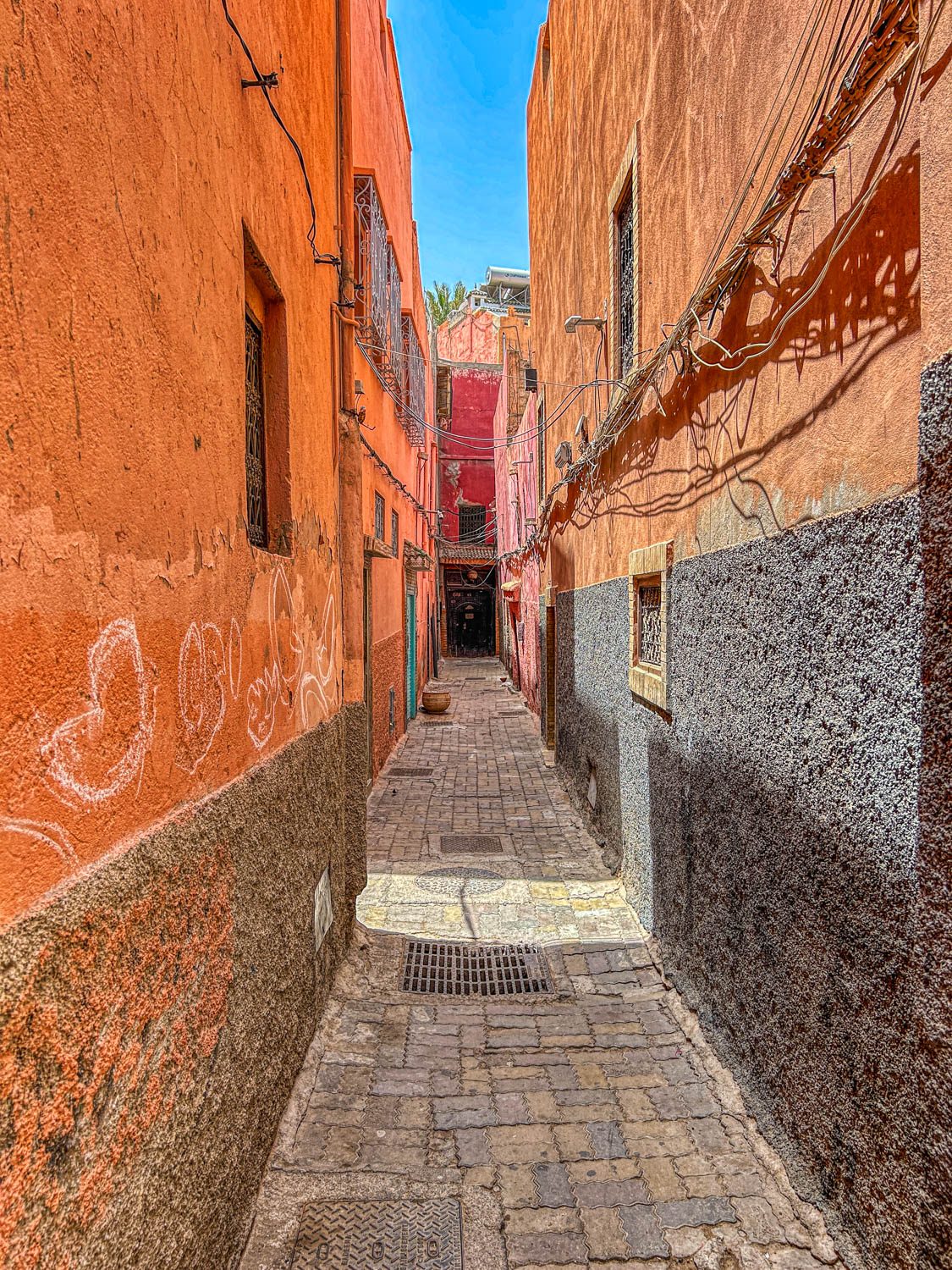
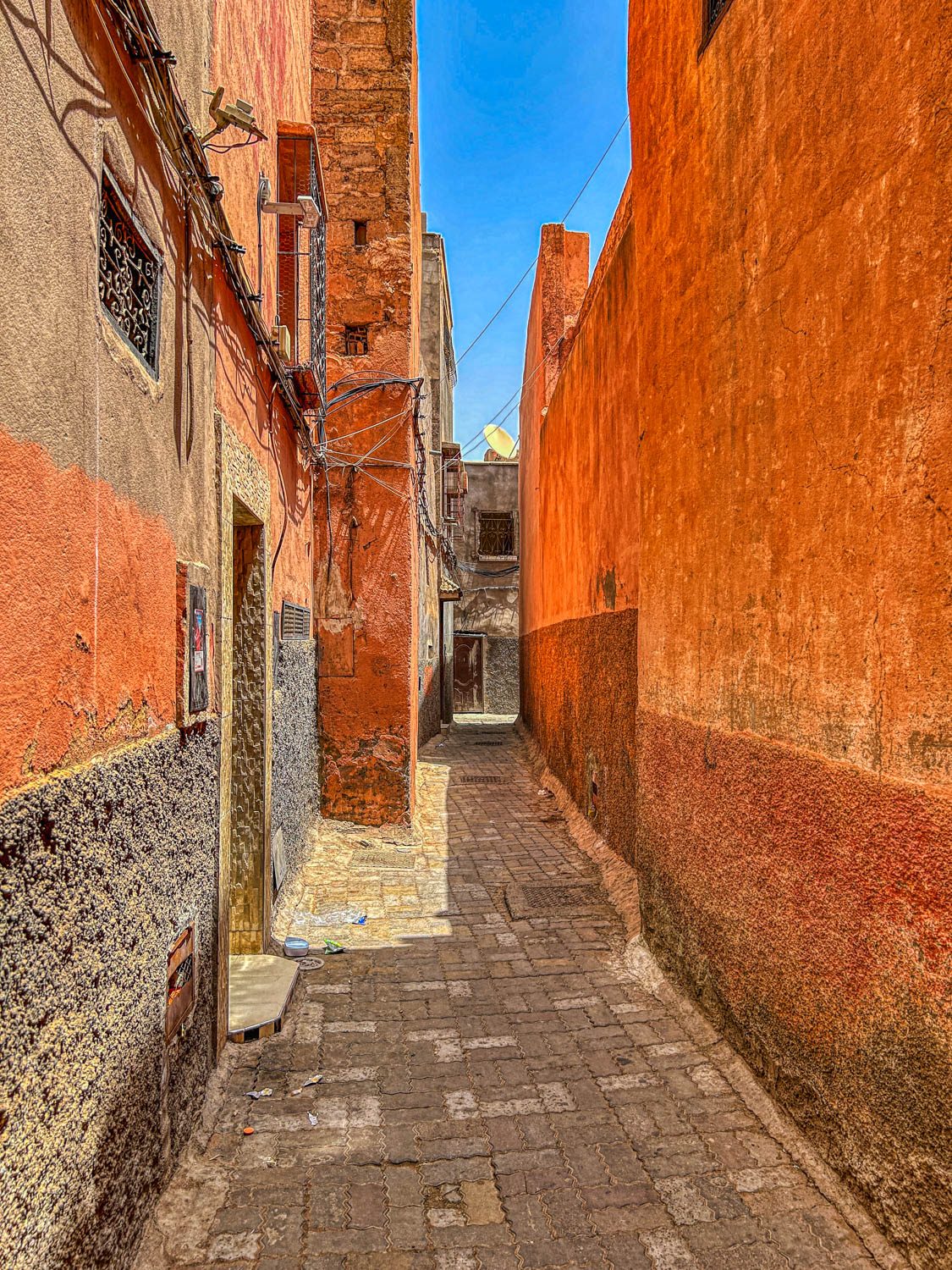
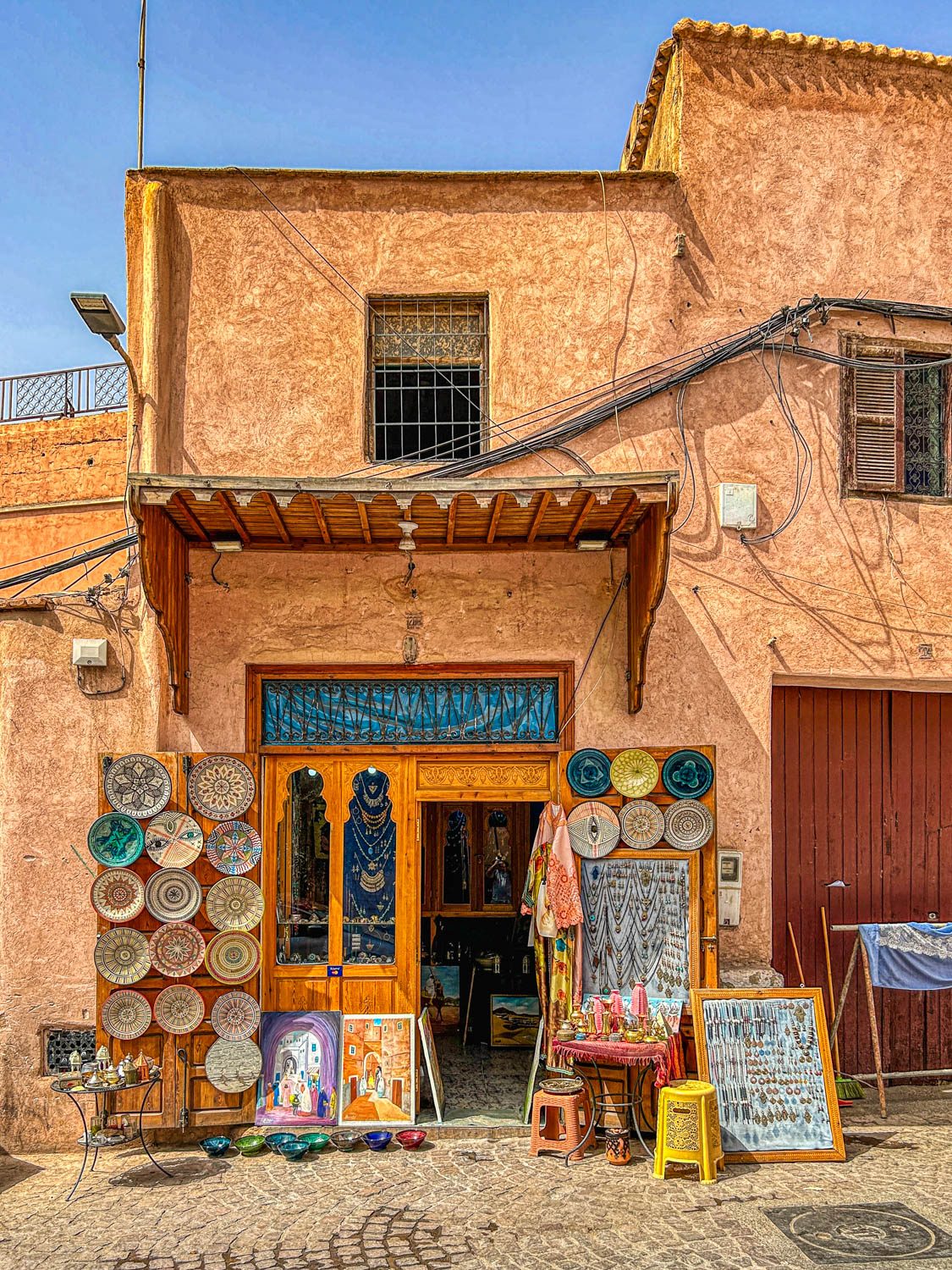
When the French took control of Morocco at the beginning of the 20th century, they built a new Marrakesh next to the old one. Today, it's all the same city, but the differences are clear. The old town is the medina (which literally means "town"), full of tortuous, narrow streets, noisy souks (open-air marketplaces), and hidden riads (traditional Moroccan houses with an open-air central courtyard). The new town, Guéliz (named after the nearby Mount Guéliz), where I live, feels a bit more European, with wide streets, public squares, and vaguely Art Deco architecture.
Marrakesh medina
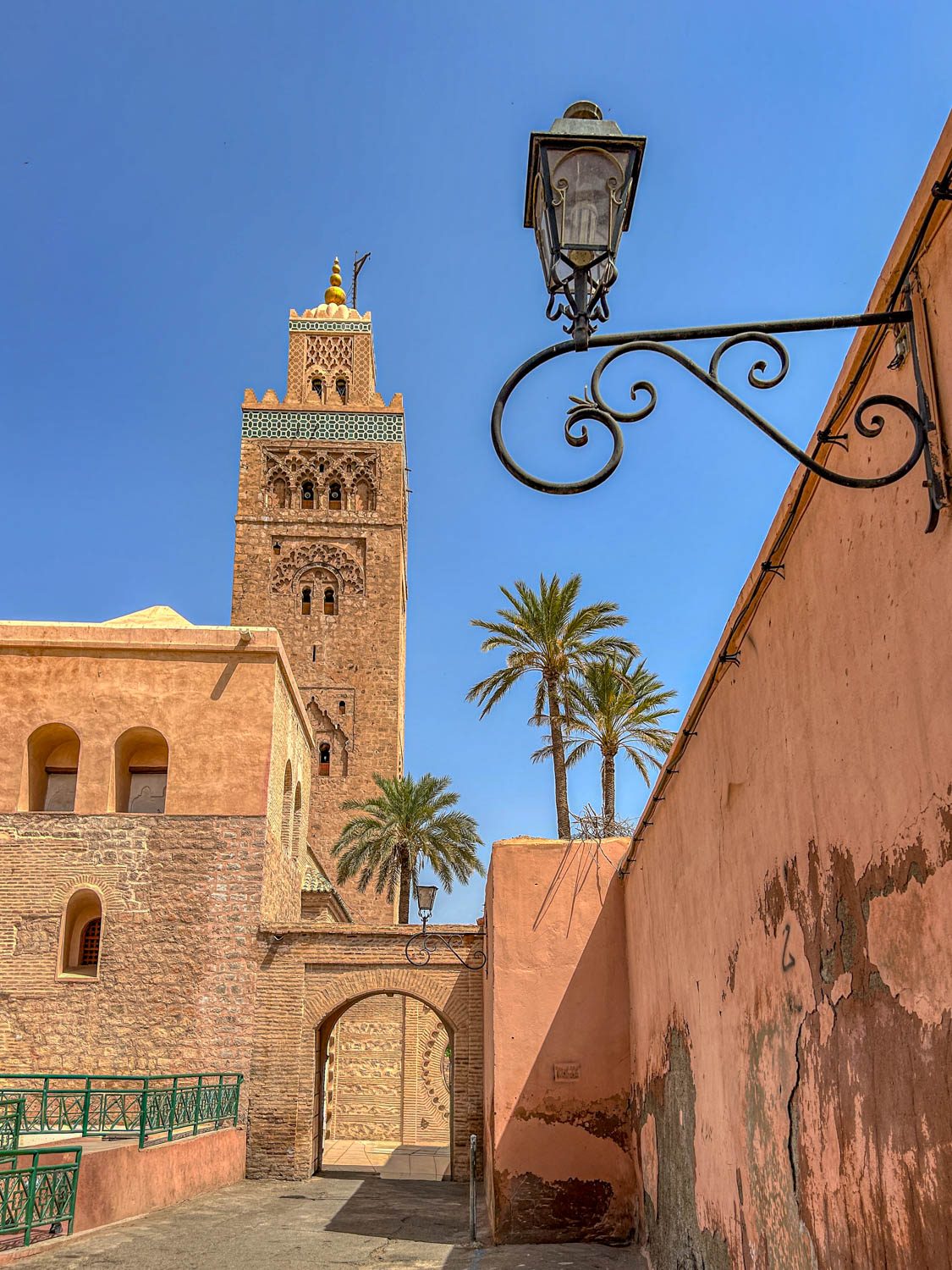
A walk from my apartment to the medina is less than 3 km, so I explored quite a bit of Marrakesh on foot (and my left ankle is now almost fully recovered). I saw many mosques, but only the façades because non-Muslims are not allowed inside. The palaces, however, are open to all tourists.
Koutoubia
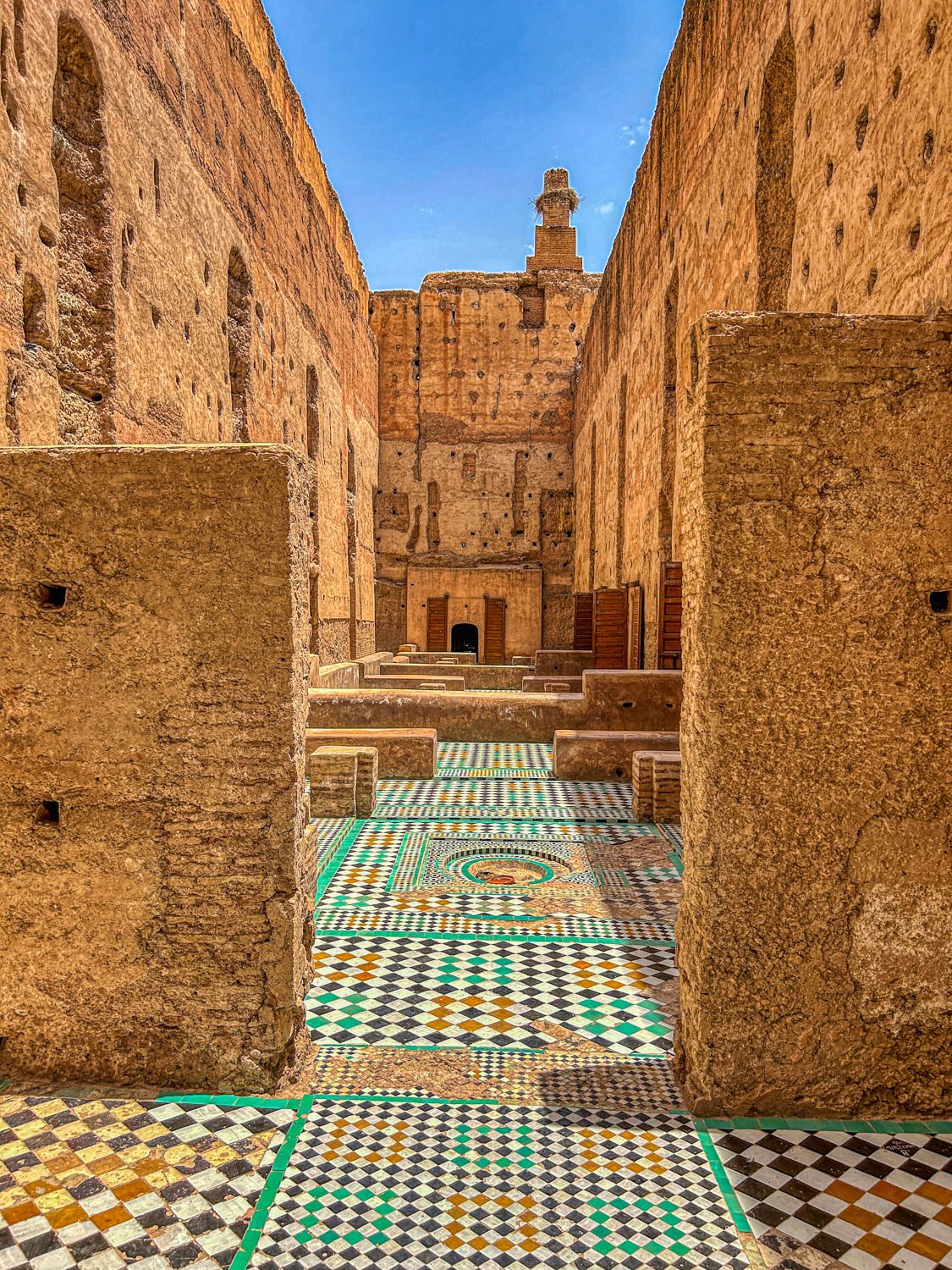
The Badi Palace ("Palace of Wonder") was built in the 16th century, commissioned by the sultan Ahmad al-Mansur, and despite being mostly in ruins today is still impressive. It has, among other things, a huge courtyard, a central pool, and four sunken gardens full of orange trees.
Badi Palace
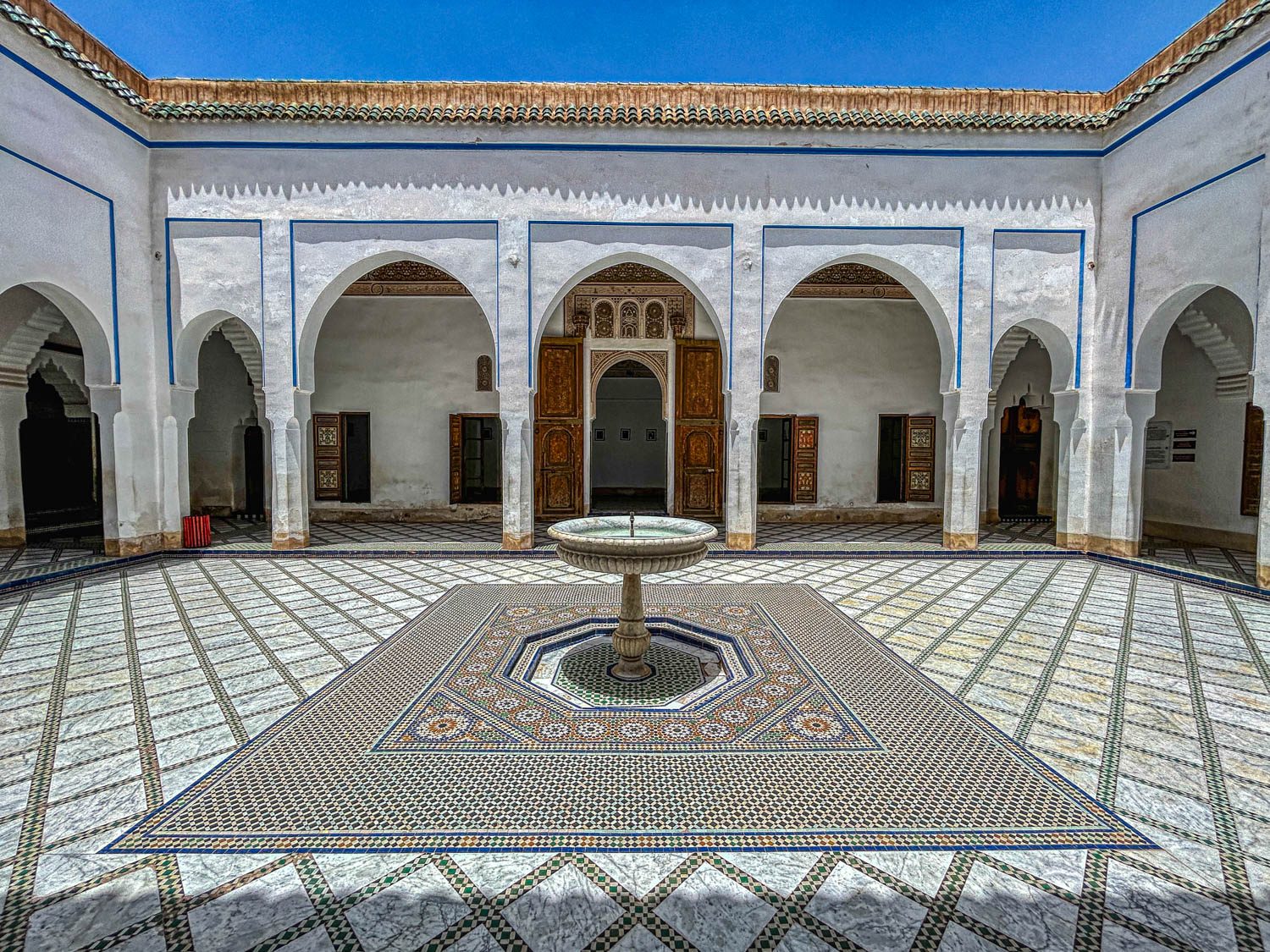
The Bahia Palace is much more recent, commissioned by grand vizier Si Musa in the 19th century. It has over one hundred rooms, all decorated with tile mosaics, painted wood ceilings, and sculpted stucco. There are also internal courtyards of different sizes (the largest one was being restored).
Bahia Palace
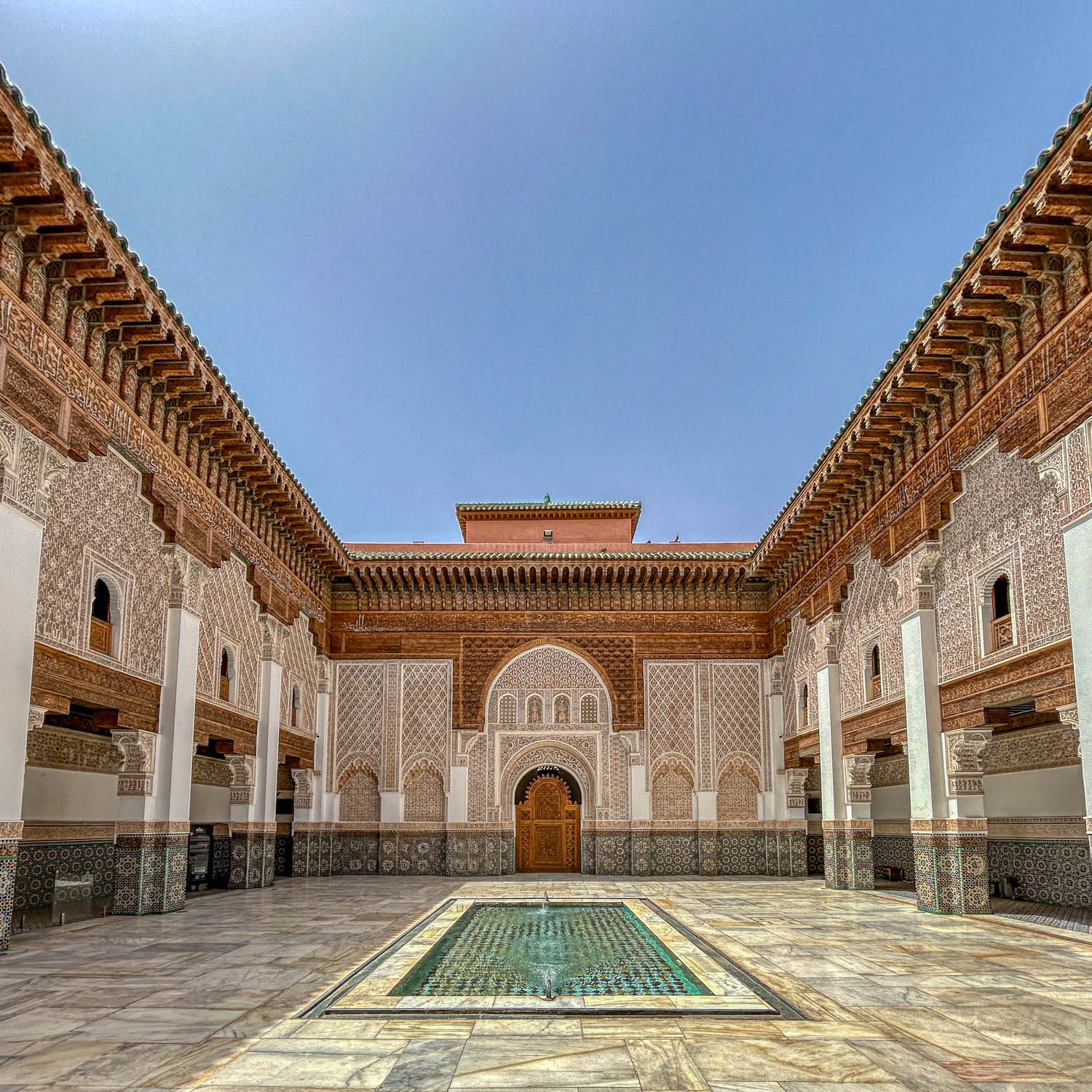
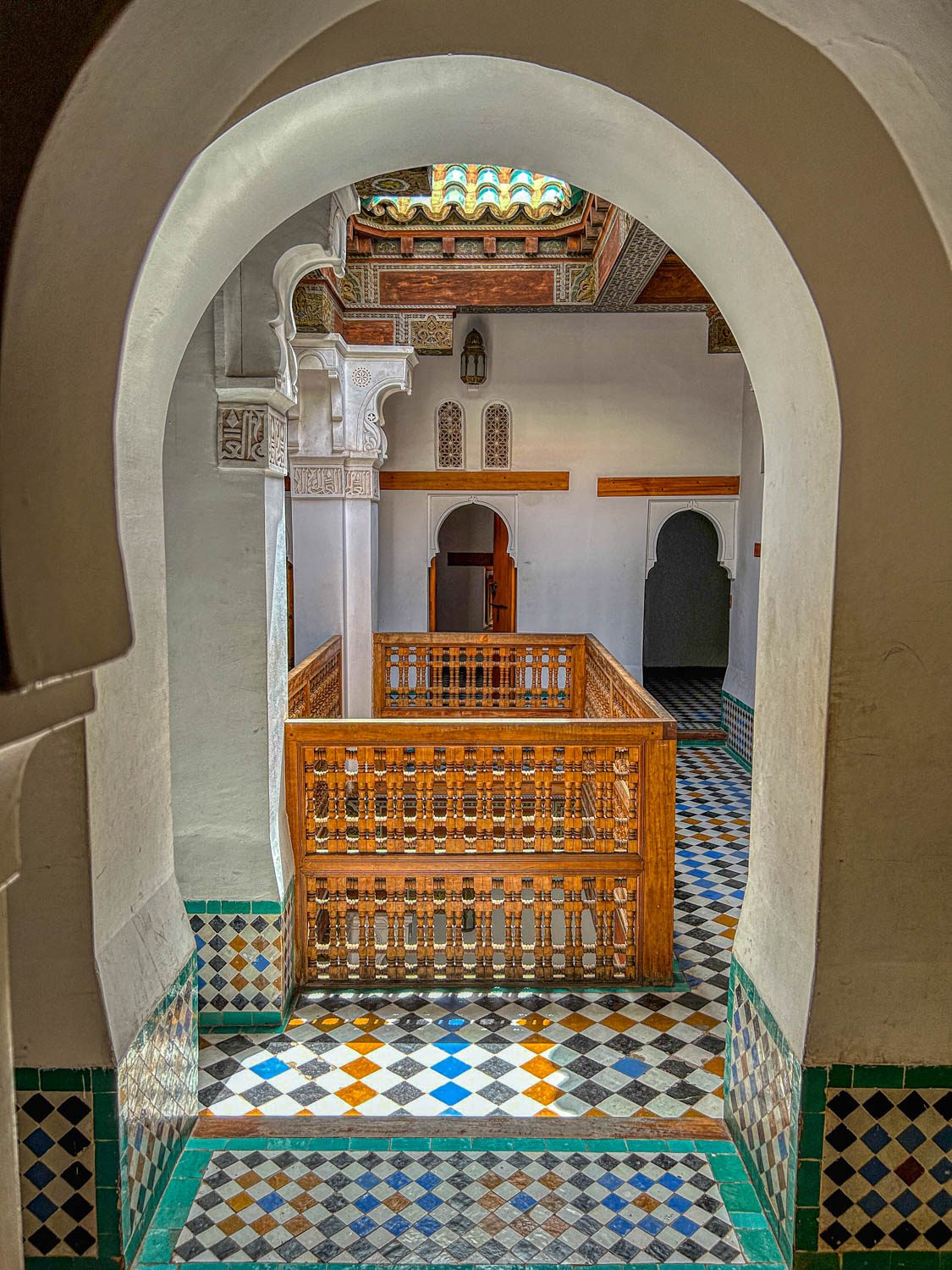
The Ben Youssef Madrasa is also open to visitors, and it has a very interesting architecture. A madrasa is an Arabic school in which religion is more often than not the main subject. This one was built in the 16th century, and is now empty and in a great state of conservation.
Ben Youssef MadrasaBen Youssef Madrasa
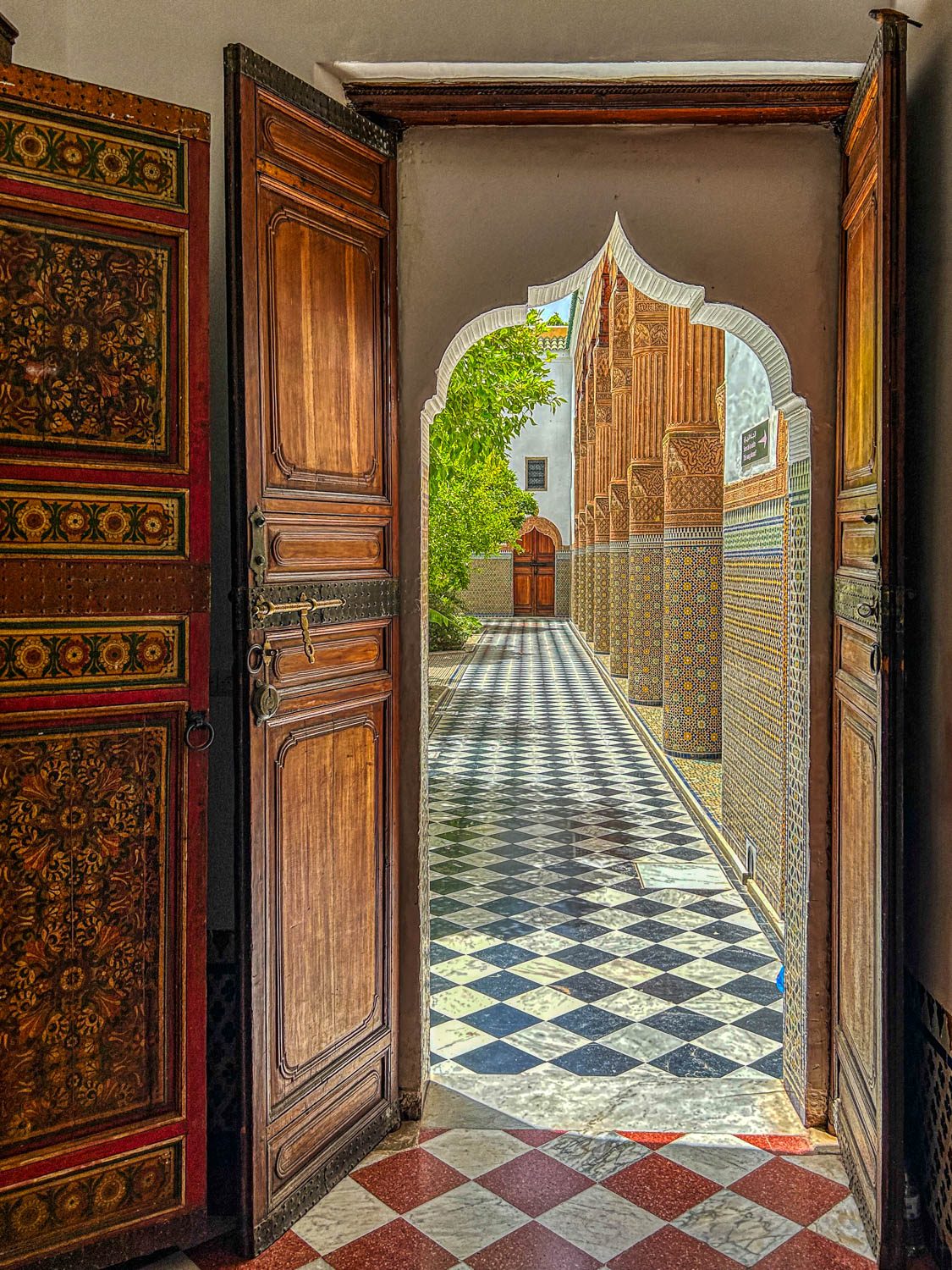
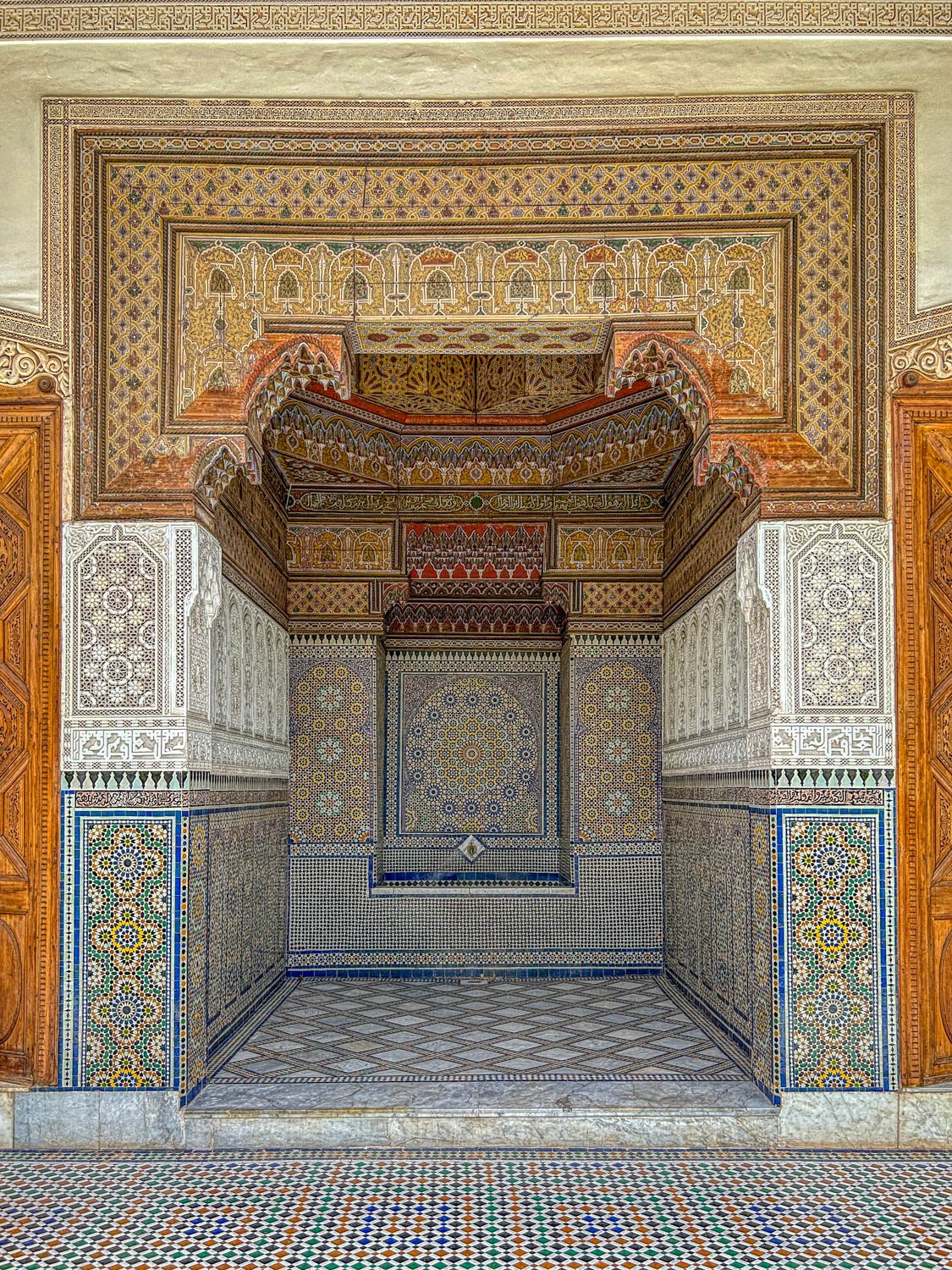
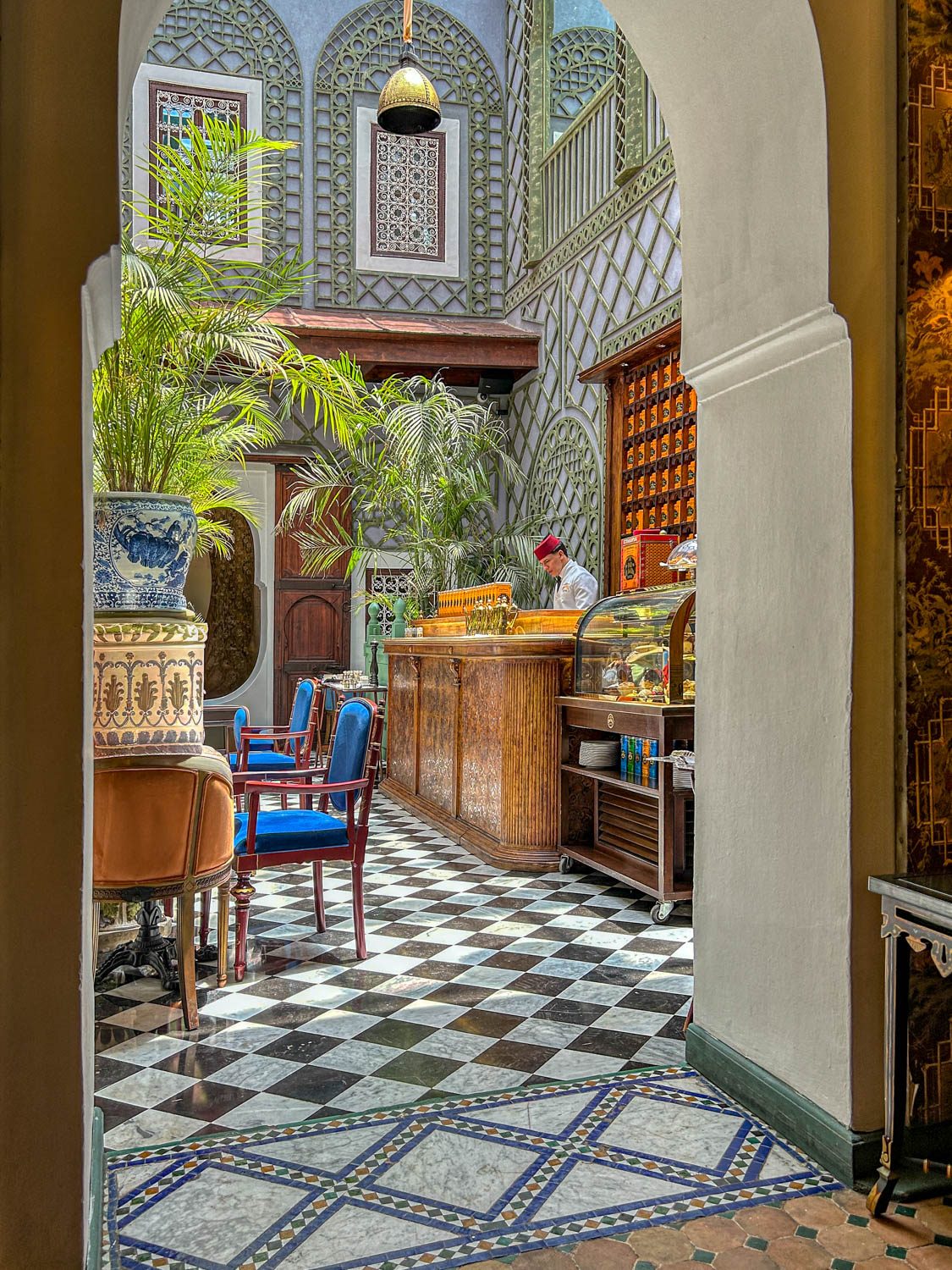
Yet another beautiful palace is the Dar el Bacha (it means "house of the pasha"), built in 1910. It's not enormous, but it has an elegant and well-decorated central courtyard, with mosaic tilework, orange trees, and the inexorable fountain. The building houses the small Museum of Confluences and, more importantly, the famous Bacha Coffee (I had visited their cafe in Bangkok, but this is the original one). Winston Churchill was a frequent visitor (he used to take painting retreats in Marrakesh) and so was Colette (she visited the city often, and wrote about it in Prisons et Paradis).
Dar el BachaDar el BachaBacha Café
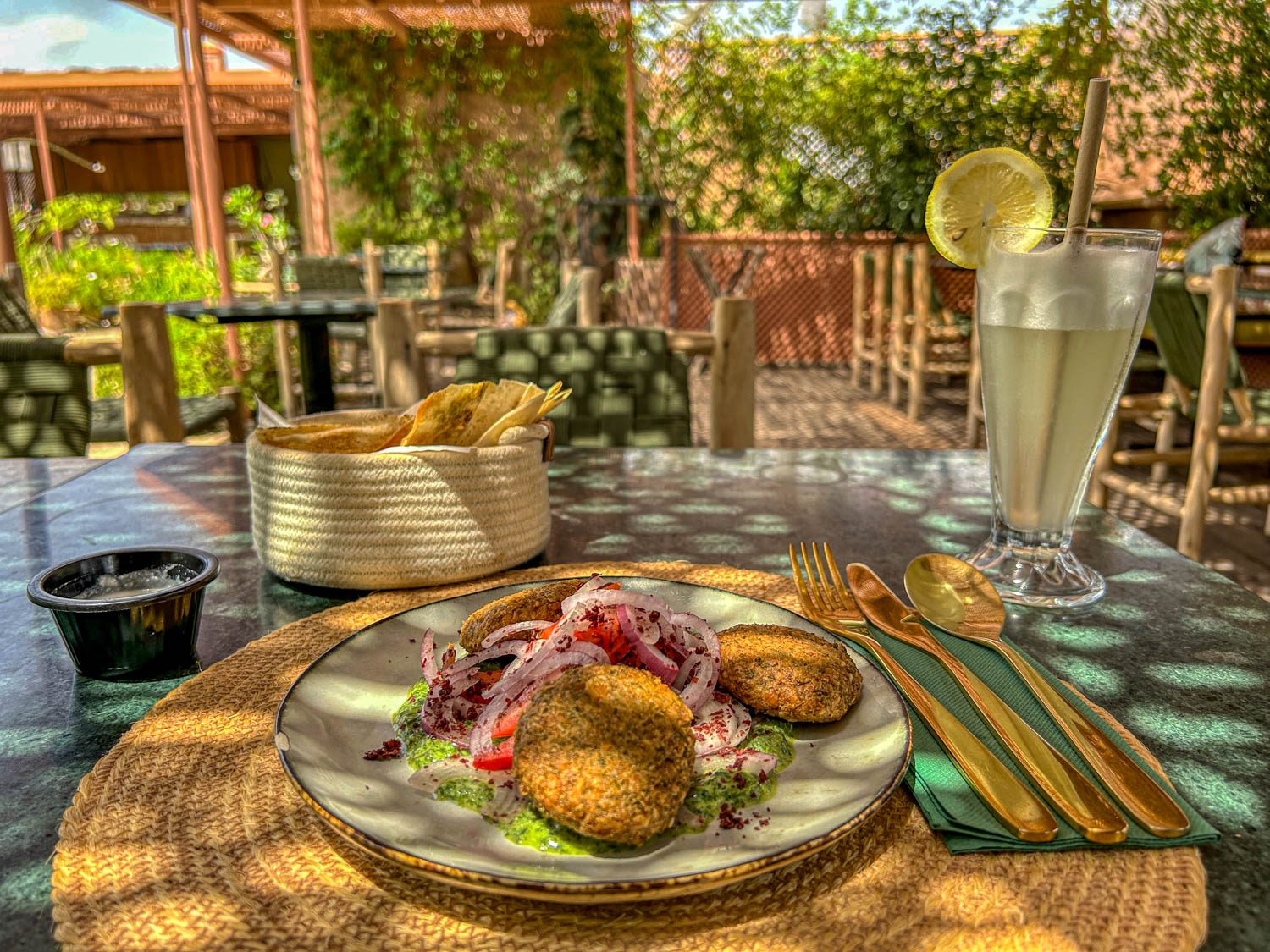
I also found a few other museums, of course. The Musée d'Art et de Culture de Marrakech had a big retrospective exhibition of contemporary local artist Abderrahim Iqbi, who paints enigmatic creatures that seem to form some personal mythology. The Monde des Arts de la Parure, as the name says, is a museum of body adornments. But the main attraction is the building itself, with an octagonal skylight and a rooftop garden restaurant (where I had some nice falafels with lemonade). La Maison de la Photographie is a small but very fine museum with mostly photos of old Morocco.
Falafel at the rooftop garden
And the heat?
Yes, the heat here cannot be ignored. The day I arrived, the temperature only reached 37ºC, which they consider mild. Then it started getting hotter. And hotter. And hotter. The hottest day in my life had been, so far, 01 August 1989 in Sevilla, Spain, with 44.8°C. Here in Marrakesh, that record was broken on 23 July 2026, with 45.8°C. (Yes, I take notes of these things. And, before you ask, the coldest day in my life was 17 January 2009, in Washington DC, with −13.0°C.)
This is not the uncomfortable heat of places like Vietnam or Cambodia, where the humidity floats between 70 and 90%. Here it's a murderous desert heat with humidity between 10 and 30%. Brutal direct sunlight, almost no clouds, almost no wind (which is actually good, because when there's wind it feels like it's coming from a hair dryer).
Fortunately, the apartment had good air conditioning and a comfortable couch to watch series on tv. Literally, Netflix and chill.
And the food?
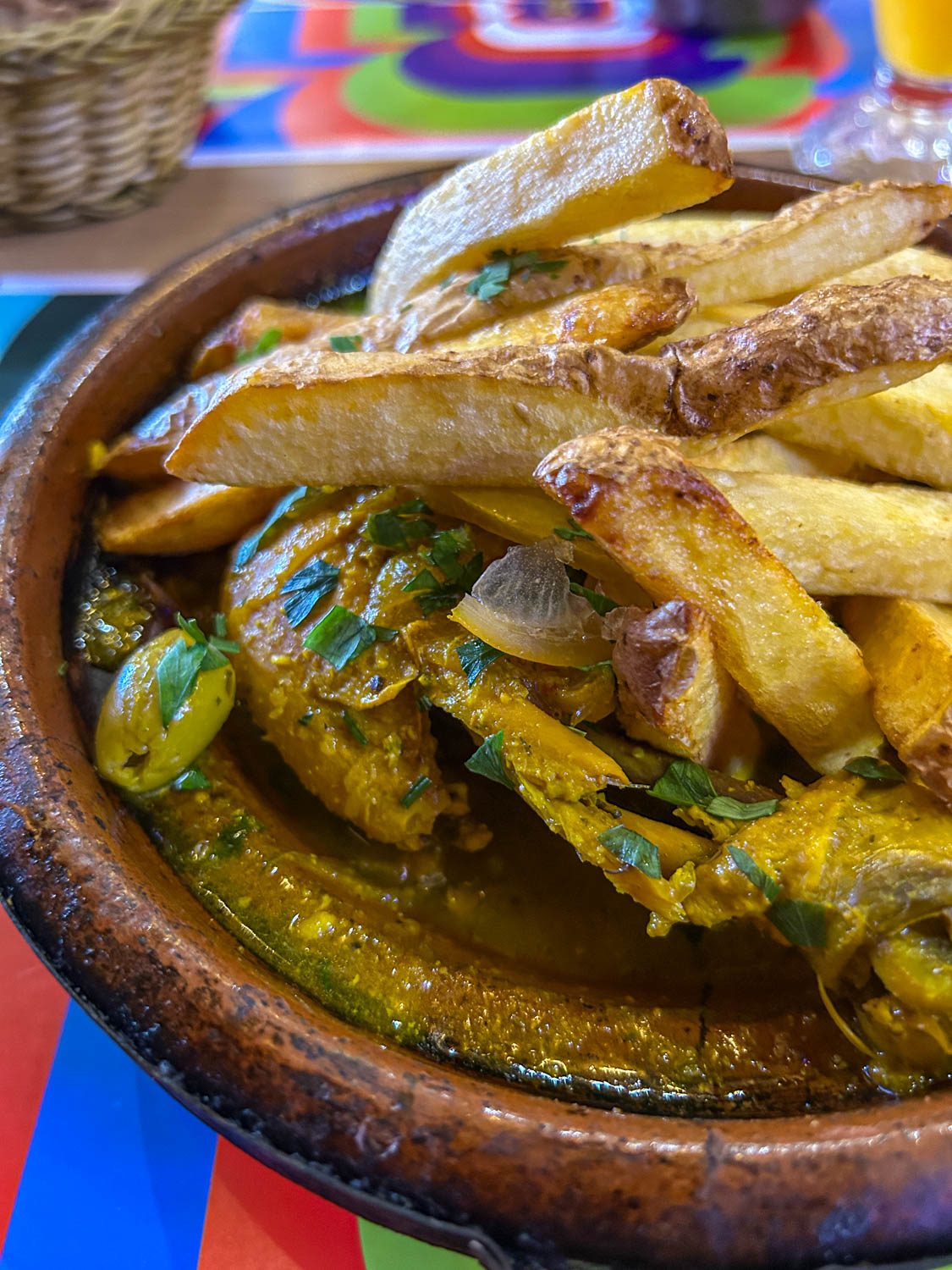
Most people will tell you that the national dish in Morocco is the tagine. But it's tricky because tagine isn't necessarily the dish but the name of the pot in which it's cooked, which can be filled with many different things. It could be chicken, it could be beef, it could be fish, and it's still called tagine. What counts is the conical lid, which traps the steam and sends it back to the pot, allowing for the stew to be made with less water than usual.
Chicken tagine
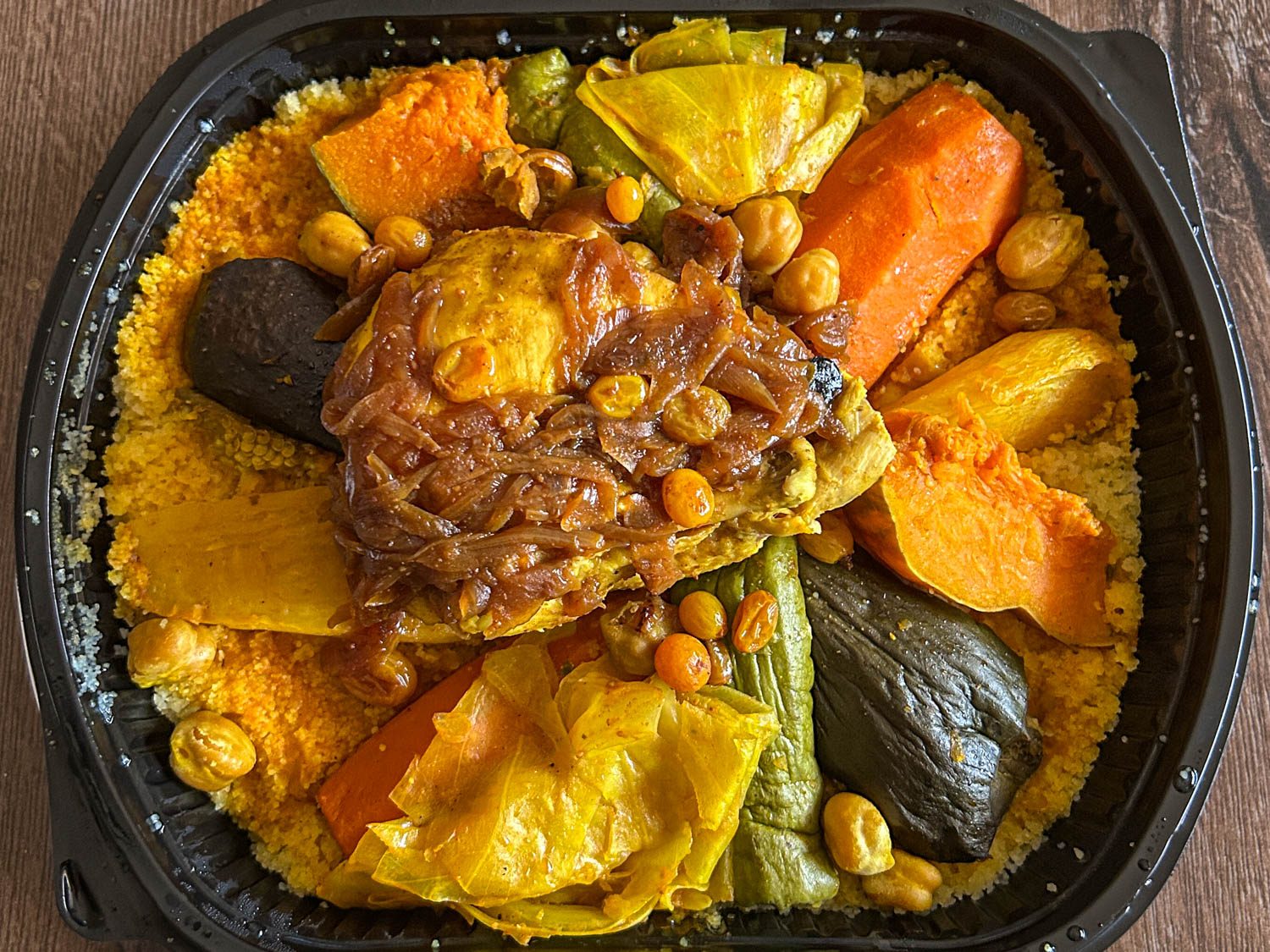
Another popular Moroccan dish is couscous, made from semolina granules mixed with broth and topped with vegetables and chicken or beef (many places here call it couscous aux sept legumes). Personally, I prefer the Brazilian variation called cuzcuz, which is made with cornmeal instead of semolina and is served with chickpeas, boiled eggs, and tuna.
Couscous aux sept legumes
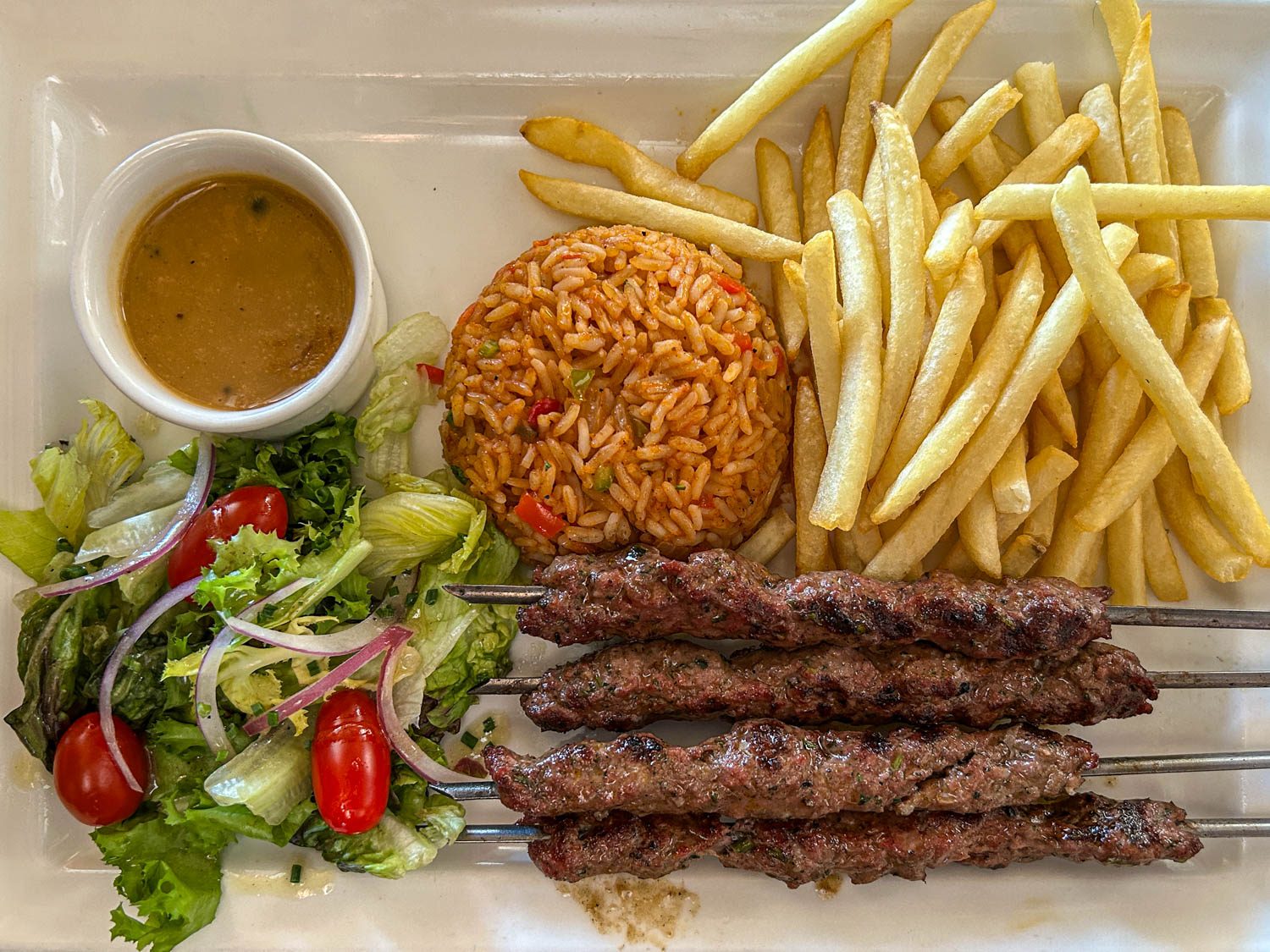
Other popular choices include dishes that you can find in other countries too, like the kefta (a mix of ground meat, onions, and spices, grilled on a stick), which I ate in Albania, among other places, or the pita poulet (grilled chicken sandwich made with pita bread), which I ate in Greece, among other places.
Kefte
I didn't know that they produced wine in Morocco, but they do. The best one I had was Château Roslane Premier Cru 2023, from the Meknès area, a mix of Cabernet Sauvignon, Syrah, and Merlot. Very good with a platter of local goat cheese, local walnuts, and local dried figs.
Any side trips?
Well, being in Morocco, I had to spend a few days in Casablanca, where Rick Blaine met Ilsa Lund again. While Marrakesh (about one million inhabitants) is the country's historic and symbolic heart, defined by its labyrinthine medina, centuries-old palaces, and bustling souks, Casablanca (more than three million people) is Morocco's modern economic capital, a sprawling Atlantic metropolis of wide boulevards, business districts, Art Deco architecture, and working neighborhoods where daily life generally takes precedence over catering to visitors.
One of the most striking differences is that Marrakesh often feels unfinished, even in its more affluent neighborhoods. Sidewalks are uneven, storefronts tend to be functional rather than refined, and many cafés rely on simple plastic tables and metal chairs, giving the city a distinctly utilitarian feel. Casablanca, by contrast, has a much more polished urban fabric. Large parts of the city feel fully developed, with well-designed boulevards, modern buildings, and cafés whose décor and atmosphere would not seem out of place in any European capital.
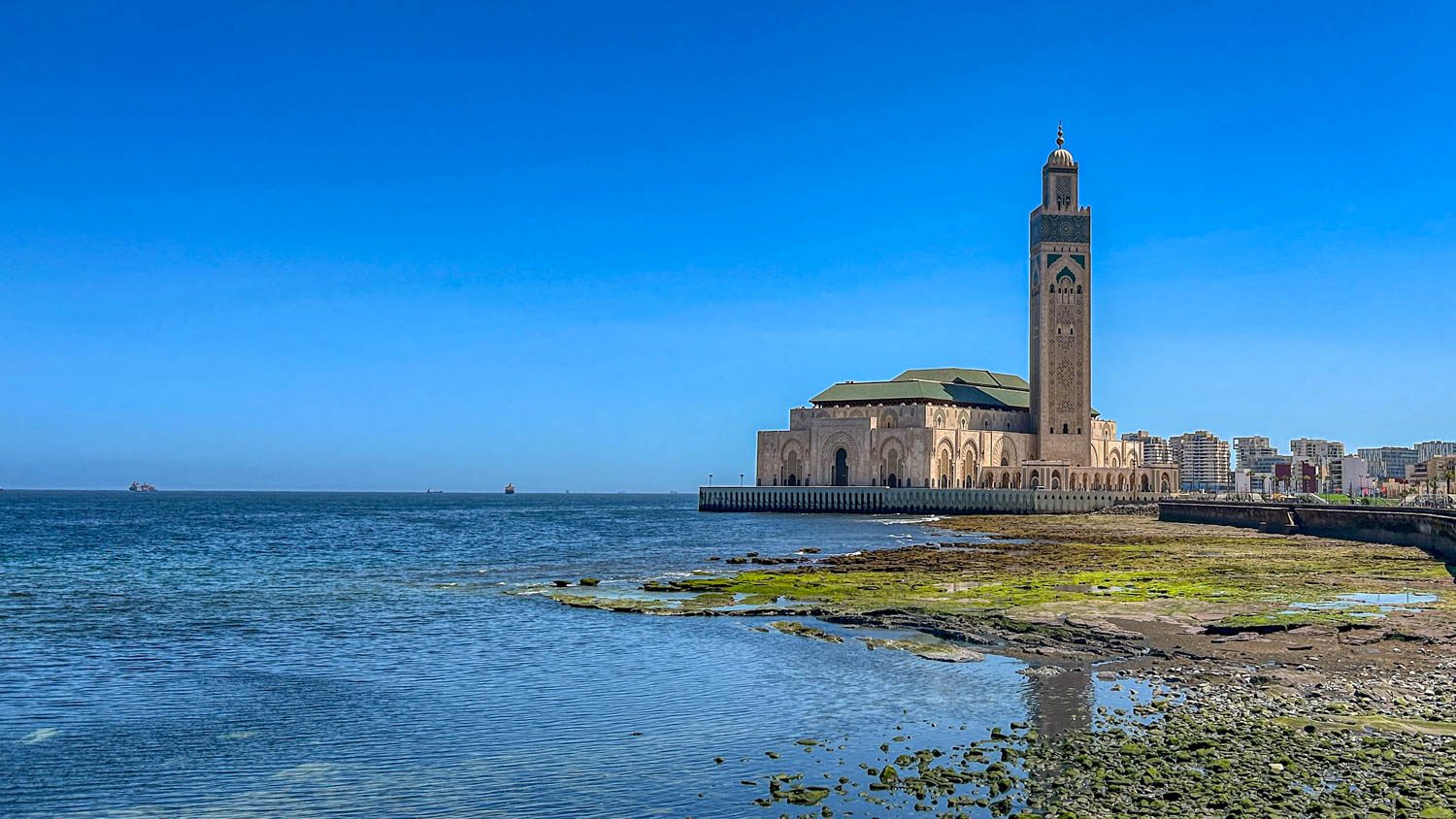
Hassan II Mosque
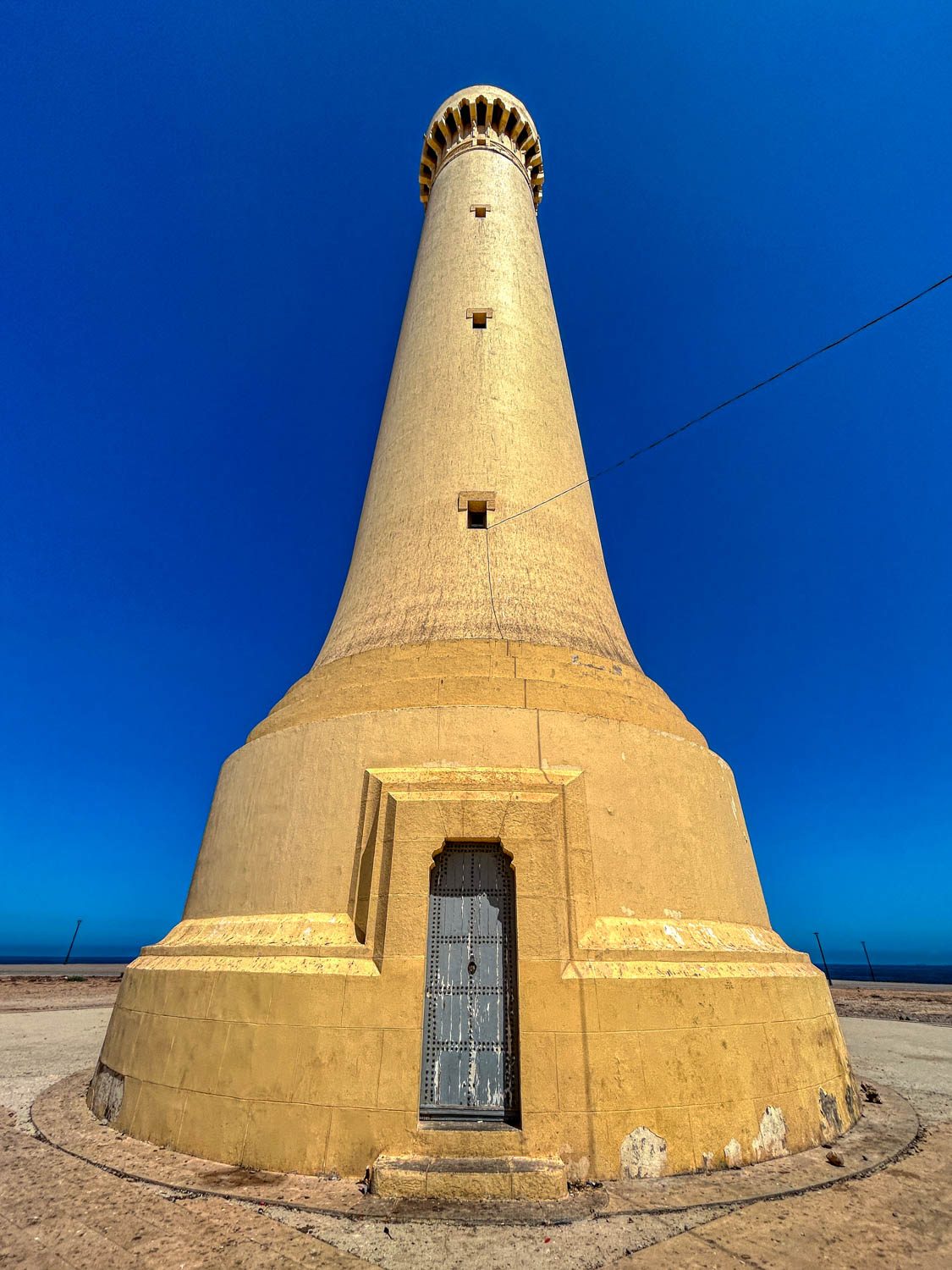
I visited the El Hank Lighthouse (the tallest lighthouse in Morocco, built in 1916) and the Hassan II Mosque (the second largest mosque in Africa, built in 1993), both by the sea. The refreshing breeze is another immediately noticeable difference from Marrakesh's desert weather.
El Hank Lighthouse
I walked a lot through the streets of Casablanca, from the old medina (late 18th century) to the new medina (about 1917-1923), also called Quartier Habous, from the Mohammed V Square (where you can see the Palais de Justice and the Hotel de Ville) to the Arab League Park (where you can see the decommissioned Église du Sacré-Coeur, sometimes called Cathédrale de Casablanca even though it was never a cathedral), and many other places.
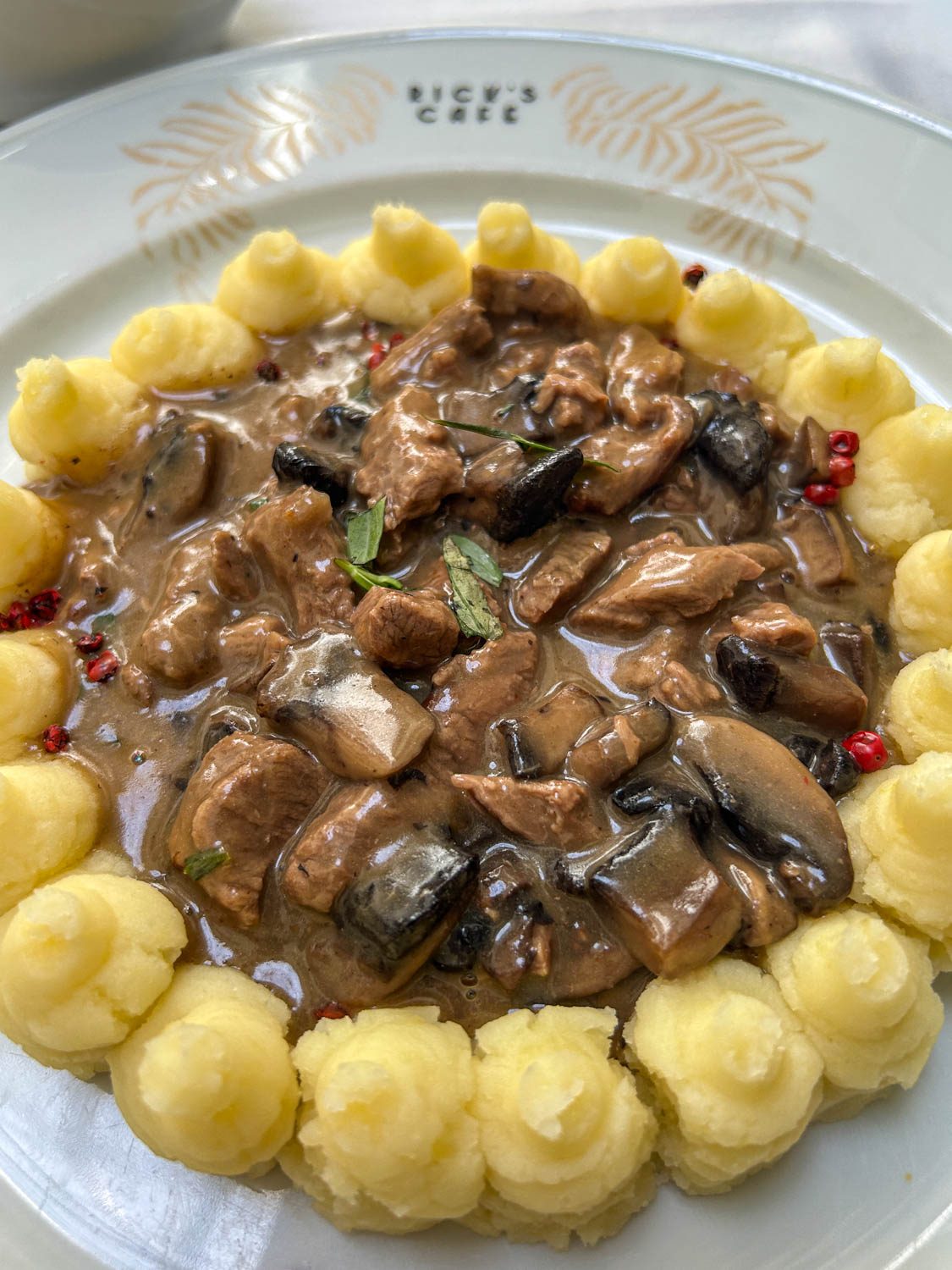
I also had lunch at Rick's Café. The name is an homage to Humphrey Bogart's bar in Casablanca, but the place doesn't try to copy the movie set. Instead, it's a large, traditional 1930 Moroccan mansion with a central patio, horseshoe arches, carved woodwork, and zellige tilework. It feels more Moroccan than the bar in the movie, which was built in Hollywood. I had a good couronne de strogonoff du beuf with a refreshing citronade.
Couronne de strogonoff du beuf
And after Marrakesh?
For the next three months I will be in the USA, mostly around New York. If you are in the area, let me know and perhaps we could meet somewhere. See ya later!